



Some streets are meant to be walked. But others — like Constitución Street — are meant to be felt. Stretching from the waves of Olas Altas Beach to the industrial pier of the port, Constitución is one of Mazatlán’s most storied and symbolic avenues. It connects the old world with the new, the 19th-century heartbeat of the city with its vibrant contemporary life. It is, without question, the most beautiful and emblematic street in Mazatlán’s Historic Center.
A Street With Many Names… and All the Ages of Mazatlán
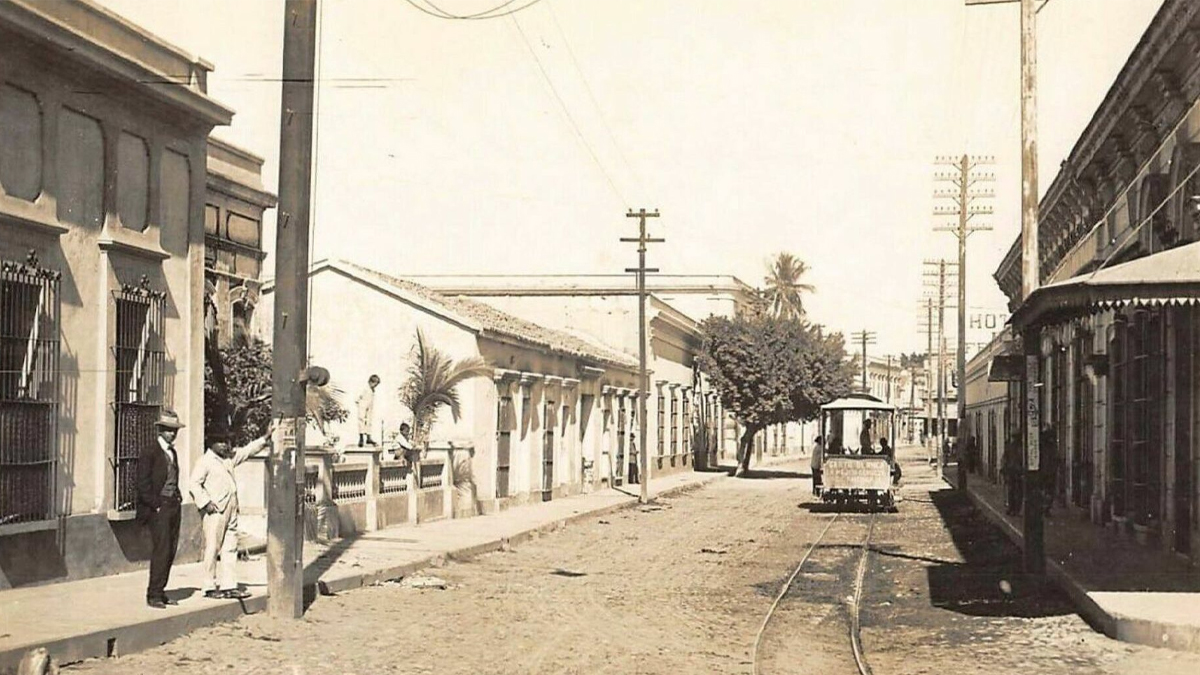
Historical records show that before it was called Constitución, the street carried several earlier names — Diana, Recreo, and Correo — each reflecting a different era in the port’s evolution. By the late 1800s and early 1900s, it had become known as “La Calle del Oro” — The Street of Gold, because it was home to the most important commercial houses and financial institutions of Mazatlán’s booming trade era. Some historians affectionately call it “the former Wall Street of the Mexican Pacific.” Walking here is walking over the footsteps of merchants, artists, sailors, writers, travelers, and dreamers.
Hotel Belmar: 1922 — A Legend Is Born
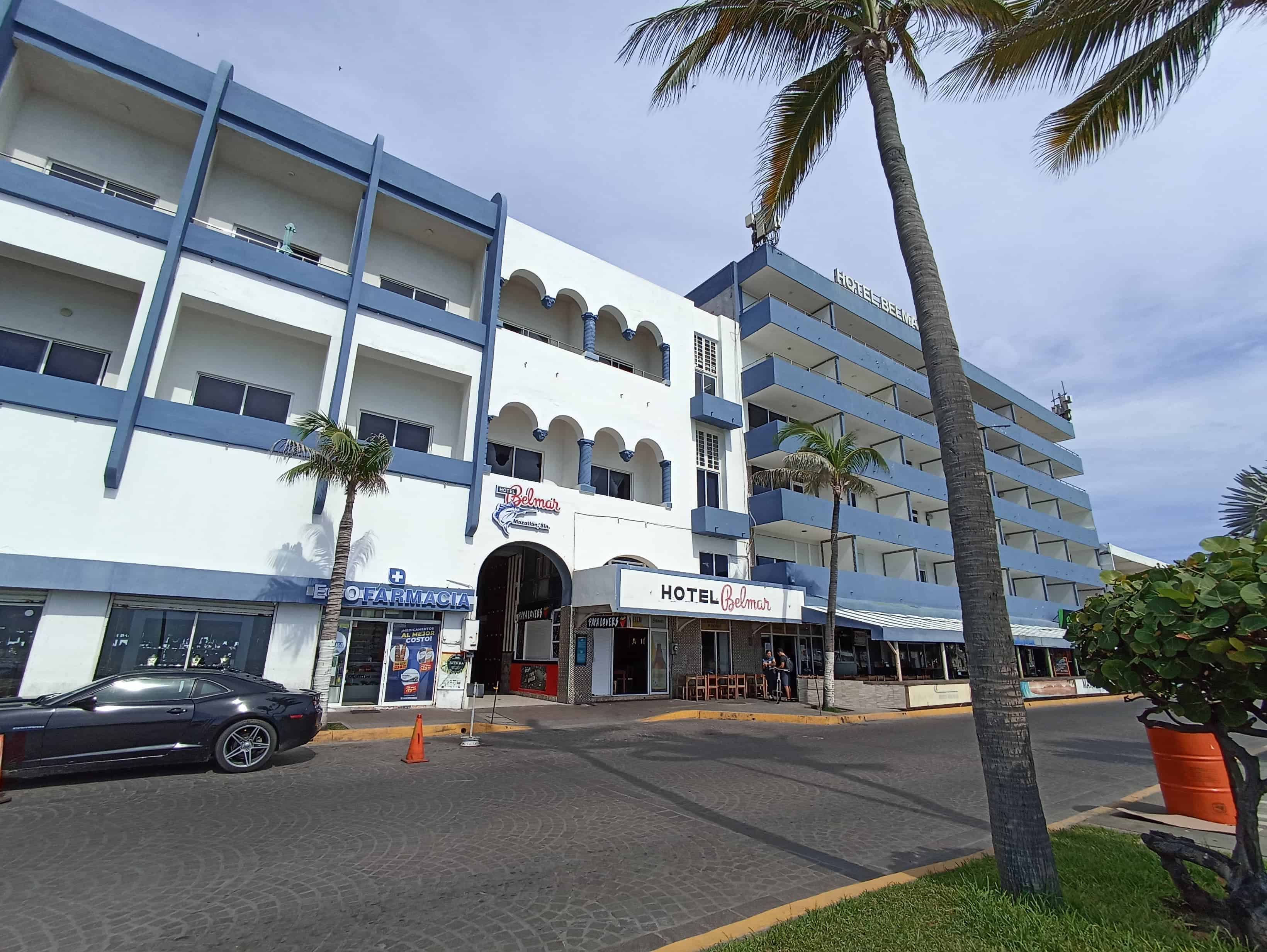
At the oceanfront entrance of Constitución rises the iconic Hotel Belmar, inaugurated on January 1, 1922. Considered one of the earliest modern hotels in Mexico, it quickly became a magnet for Hollywood stars, writers, and explorers who arrived seeking the charm of the Pacific coast. Its guest lists include:
John Wayne

Walt Disney

Tyrone Power
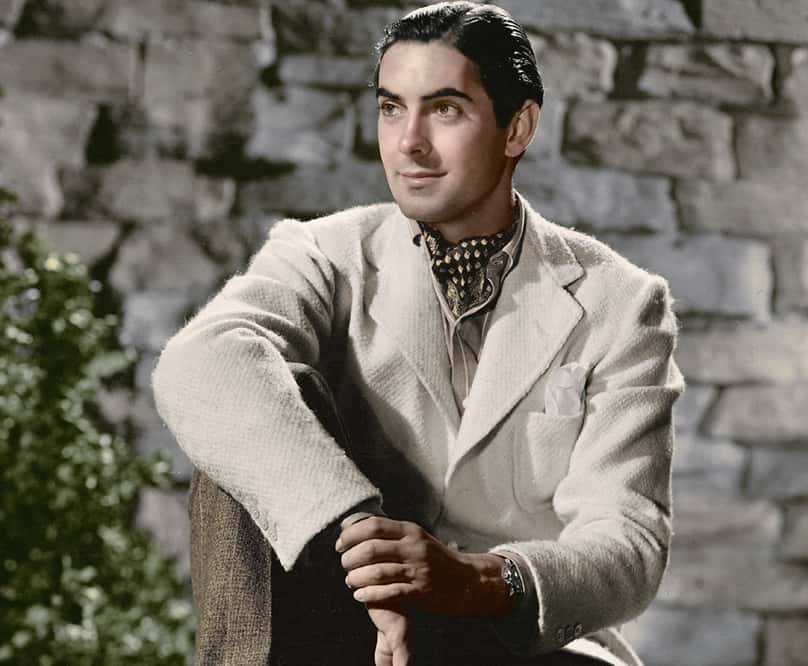
The Belmar is still a living monument to the golden age of cinema and travel — a place where legends once looked out over the same waves of Olas Altas.
Melville House: A Tribute to Maritime Literature
A short walk inland brings you to a building known today as the Melville, named in honor of Herman Melville, author of Moby-Dick. Though no official records confirm a long stay there, local tradition holds that Melville spent time in Mazatlán during his maritime journeys across the Pacific — a story that has become part of the city’s beloved oral history. Today, the elegant Pueblo Bonito Vantage preserves this literary homage through its signature restaurant, The Melville, where visitors dine surrounded by the spirit of adventure and the mystique of the sea.

Amado Nervo: Poetry on Every Corner
At the intersection of Constitución and Carnaval once stood the offices of El Correo de la Tarde, where Amado Nervo, one of Mexico’s most celebrated poets, worked in the late 19th century. One can almost imagine him seated by a window, listening to the clatter of printing presses, shaping verses that would one day echo far beyond Mazatlán.
Ángela Peralta: 1883 — The Voice That Floated Over the Street
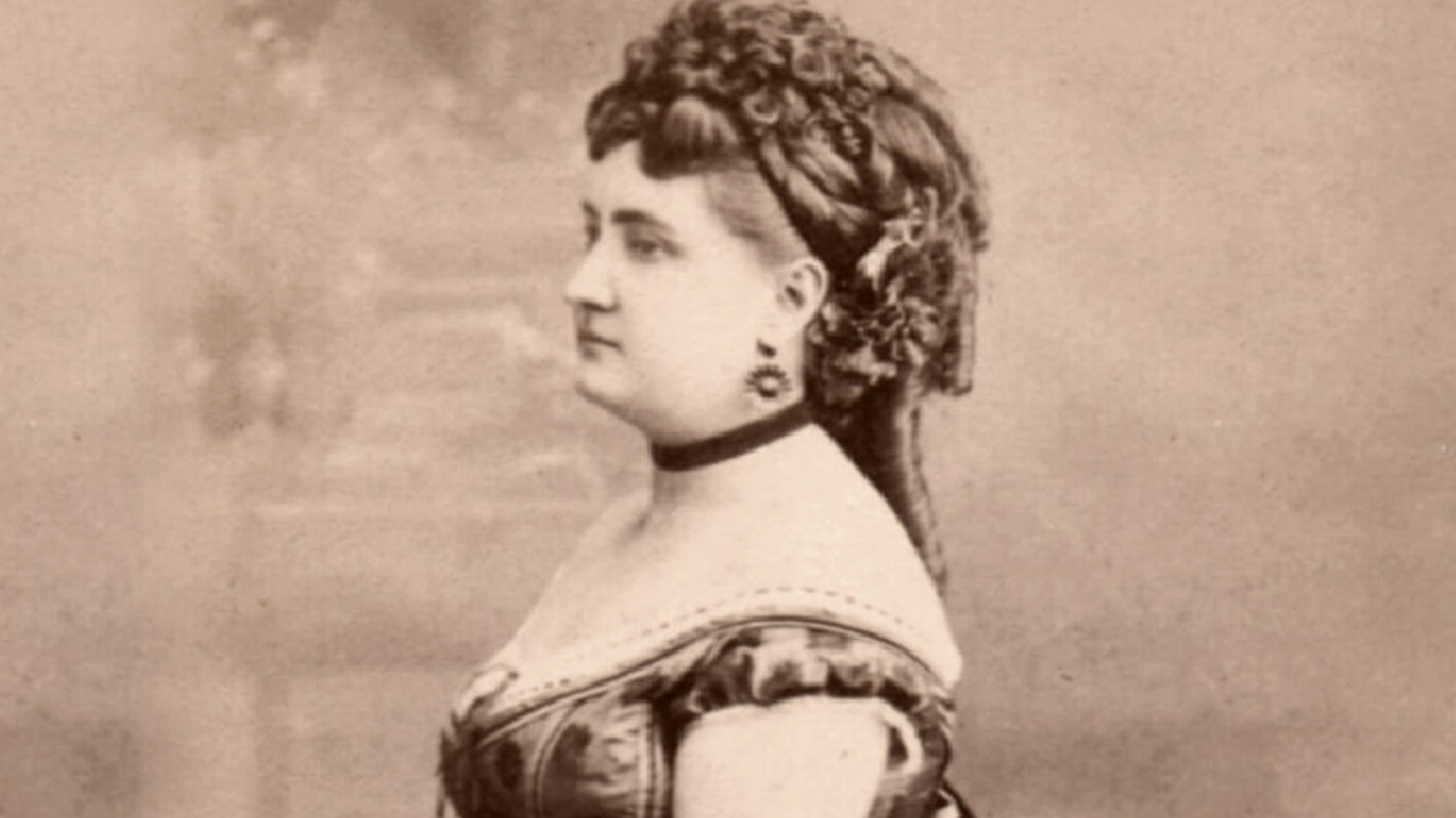
Further along the street unfolds one of Mazatlán’s most poignant cultural stories: the arrival of Ángela Peralta, the “Mexican Nightingale,” in 1883. Gravely ill with yellow fever, she was unable to perform at the theater — then called Teatro Rubio. Yet legend says she stepped out onto the balcony of the old hotel located where today stand the Ángela Peralta Theater and the Municipal Center for the Arts (CMA), and from there, overlooking Constitución Street, she sang “La Paloma.” It is said the entire city fell silent. Some say her final note still lingers in the air.
The Birthplace of a National Icon: Pedro Infante
Near the far end of Constitución Street stands a modest but deeply meaningful home: the birthplace of Pedro Infante, Mexico’s most beloved actor and singer. Born on November 18, 1917, Infante first opened his eyes to the world at Constitución Street No. 1106, in the heart of Mazatlán’s Historic Center. From these very streets — filled with musicians, fishermen, merchants, and the daily poetry of port life — emerged the young boy who would grow into a national legend, a symbol of Mexico’s Golden Age of Cinema, and an eternal voice cherished across generations.


Antonio López Sáenz: The Painter of Mazatlán’s Soul
No story of Constitución would be complete without mentioning Antonio López Sáenz, Mazatlán’s most iconic painter. His gentle silhouettes, warm palettes, and poetic scenes capture the city’s essence — its people, its simplicity, its ocean breeze, its rhythm. His work feels as if it were painted directly from the heart of this street.

Architecture Through the Ages
Constitución showcases an exquisite blend of styles:
-
19th-century neoclassical tropical façades
-
Iron balconies and handcrafted shutters
-
Thick colonial walls
-
And 20th-century modernist structures, such as the former Bank of Mexico near Olas Altas
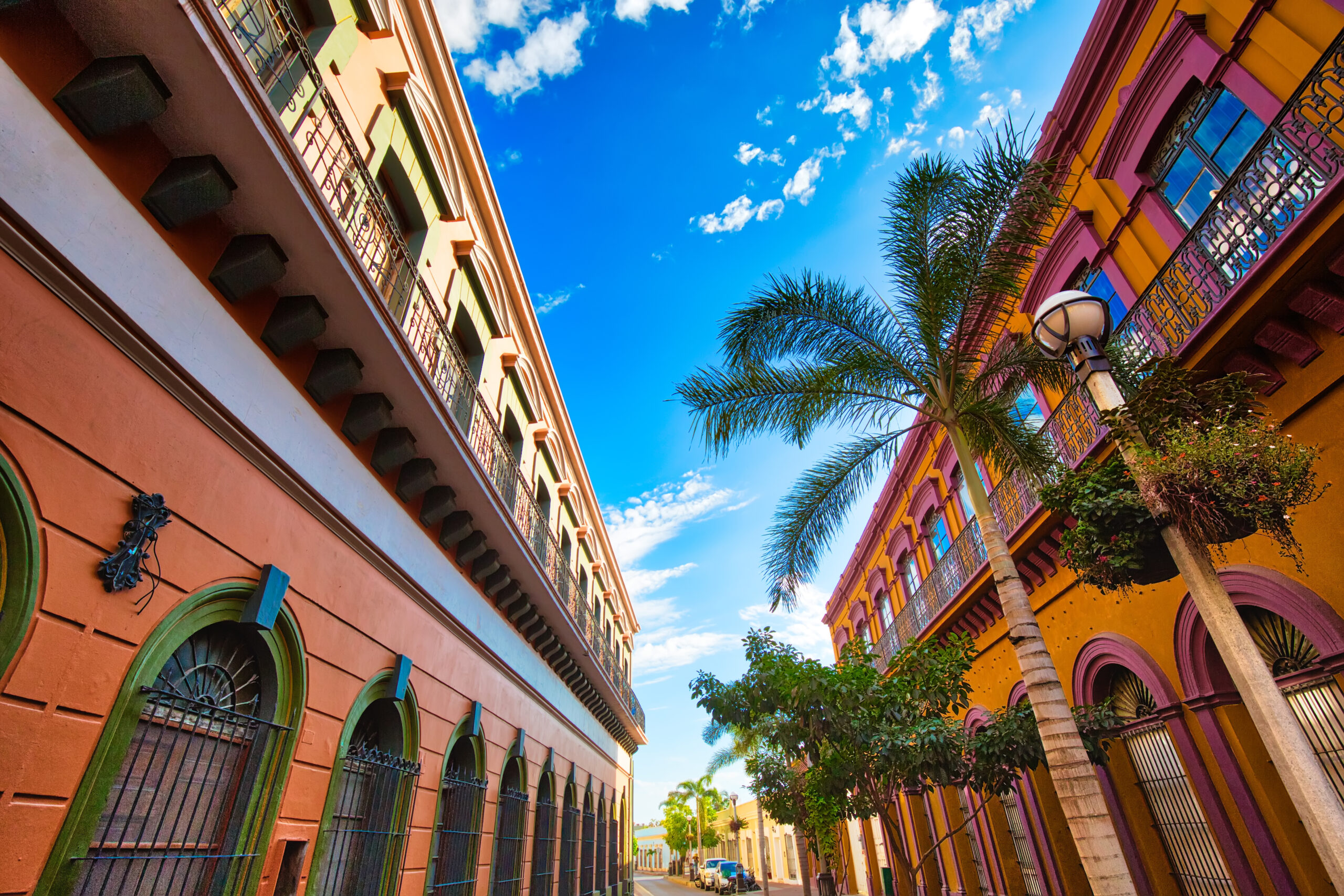
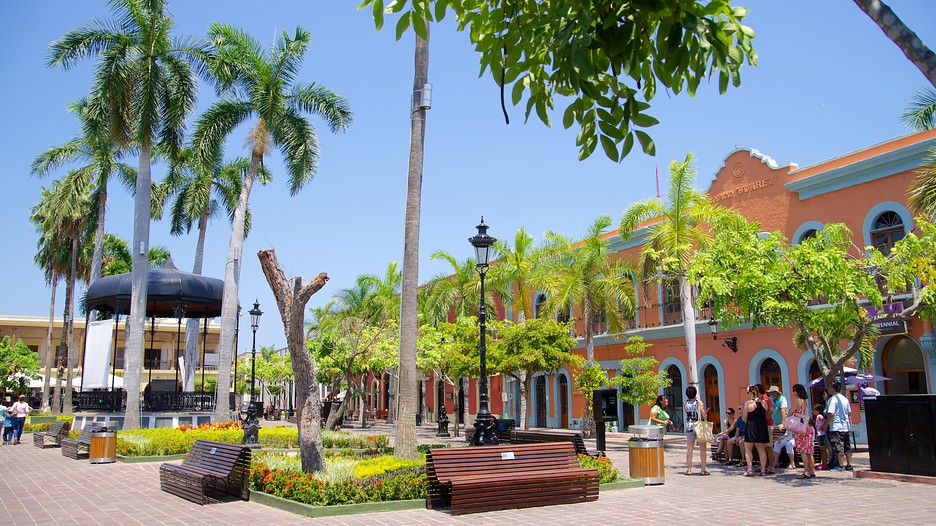
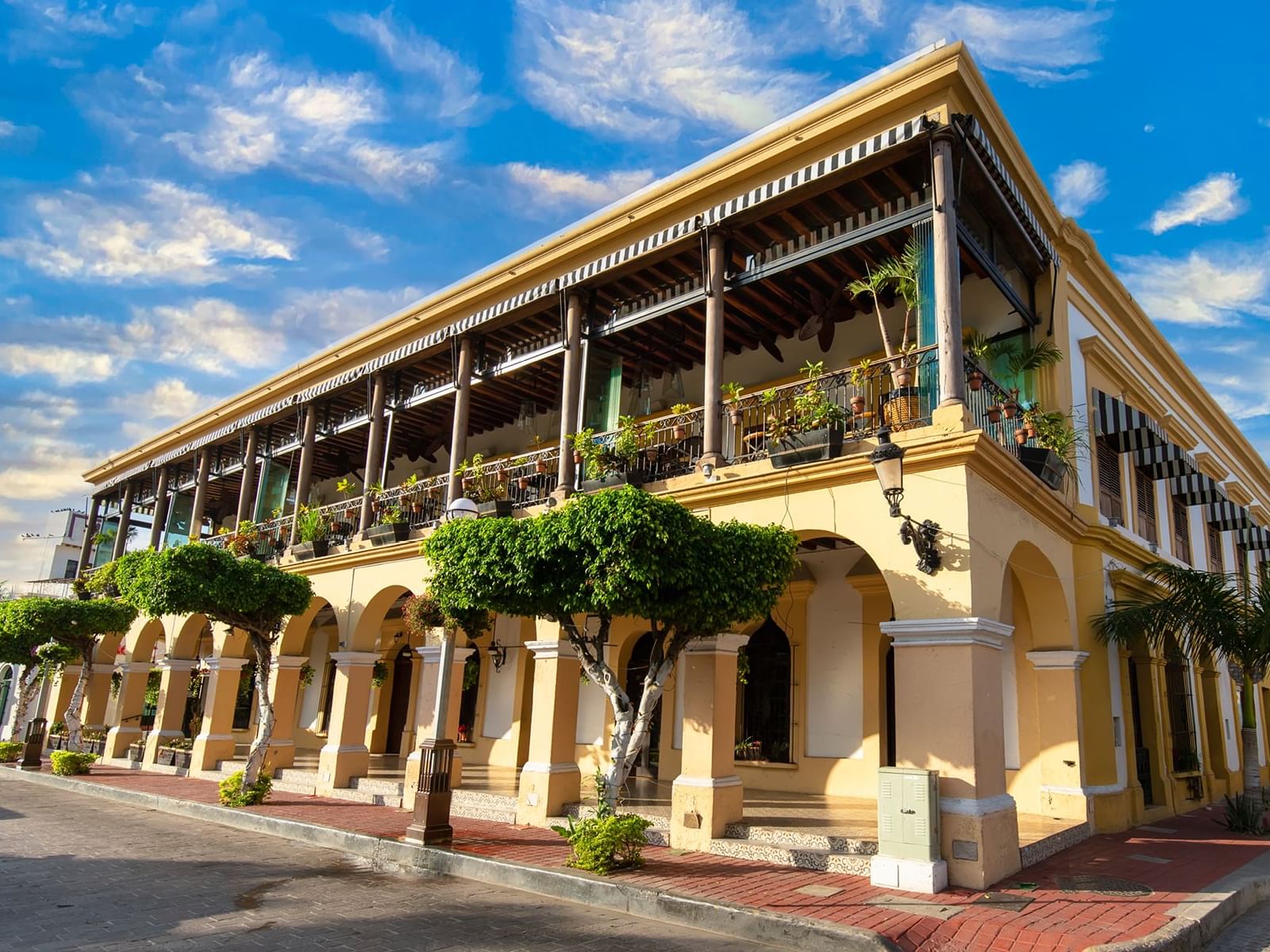
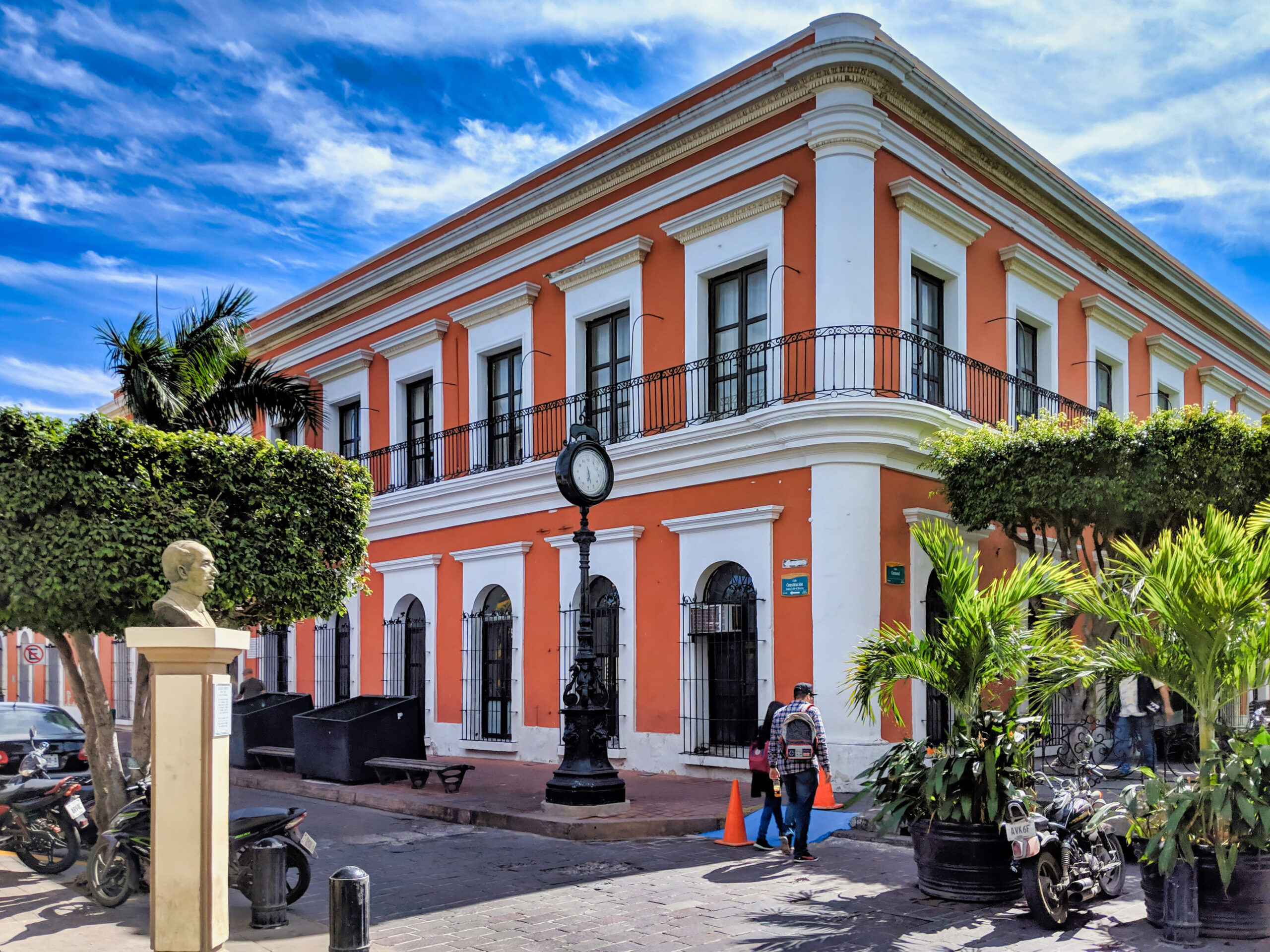
This mixture transforms the street into one of the most photogenic in all of Mazatlán.
And at Sunset… the Street Turns to Gold
Every afternoon, a quiet miracle descends upon Constitución. As the sun sets over Olas Altas, a golden light floods the street, illuminating balconies, warming stone walls, and turning the cobblestones into a soft amber glow. It is a scene that repeats every day — and yet feels new every time. Like a gift Mazatlán offers its visitors and locals alike.
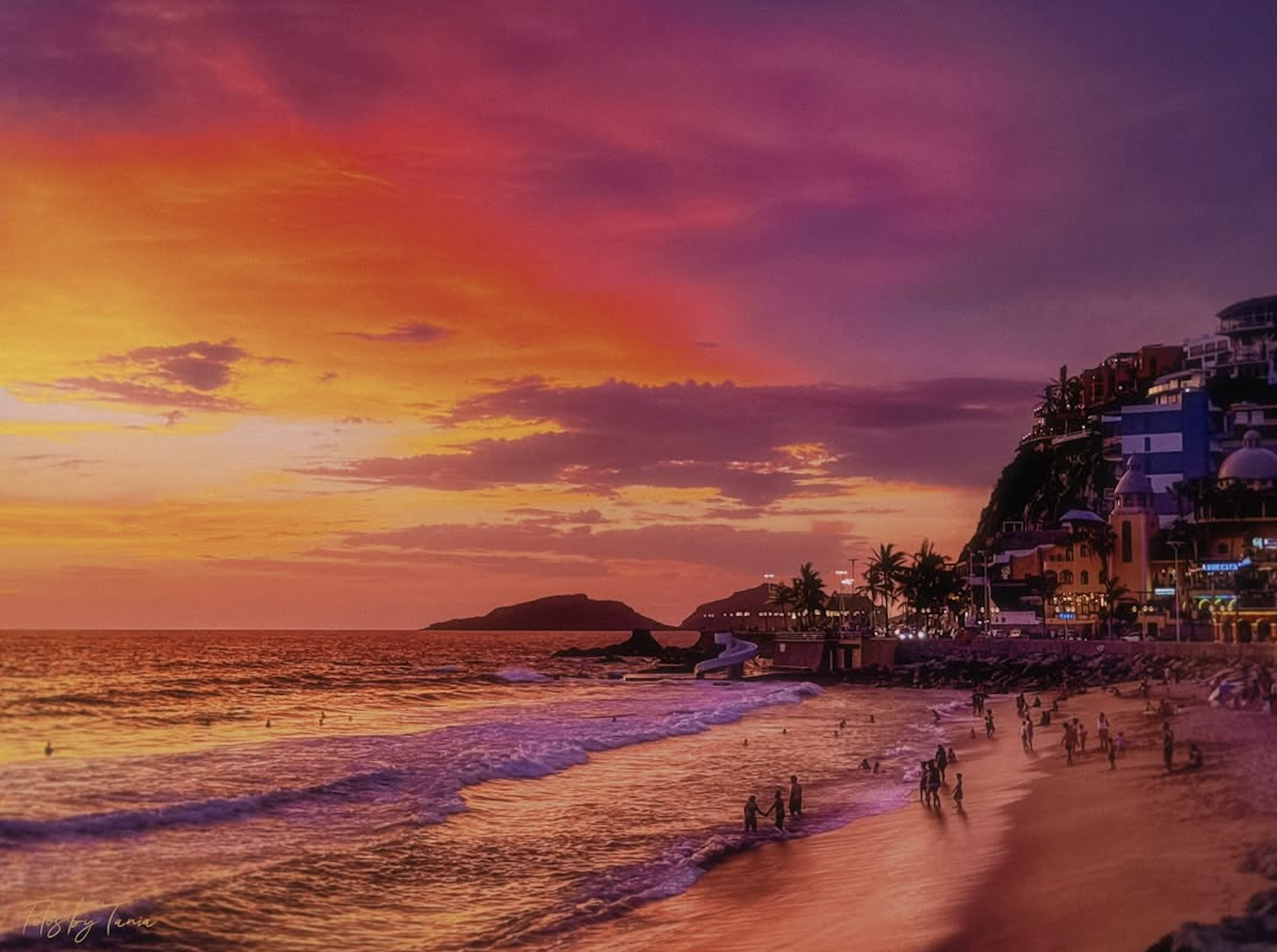 foto: Instagram @fotosbytania
A Street to Walk, to Feel, to Discover
Constitución is not just a road connecting Olas Altas to the industrial pier. It is a cultural corridor. A living museum of stories. A timeline of Mazatlán’s soul. A treasure filled with legends, memory, and wonder. Every step reveals a secret. Every corner holds a memory. Every sunset writes a new chapter.
To walk Constitución is to fall in love with Mazatlán… again and again.