



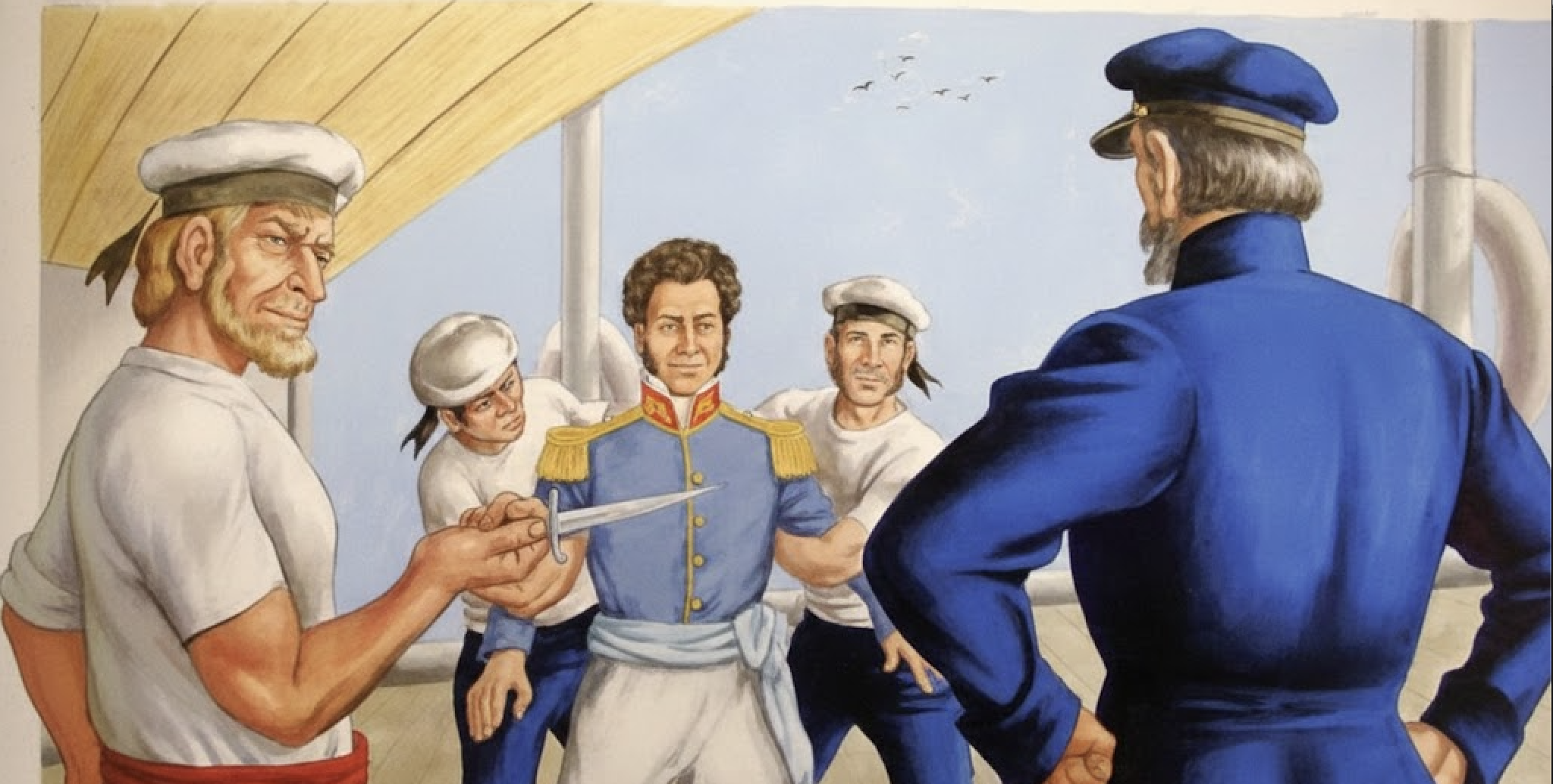
Francisco Picaluga y Sicolame (Genoa, Italy, 1792 – ibid., 1836) was a Genoese sailor whose name became forever associated with one of the darkest betrayals in Mexican history. Owner and captain of the brig Colombo, Picaluga sailed frequently between South America and Mexico, transporting goods and navigating the turbulent political waters of the early nineteenth century. Yet he is remembered not for his maritime career, but for his decisive role in the capture and death of former Mexican president Vicente Guerrero.
A Sailor in Troubled Times
Born in Boccadasse, a coastal district of Genoa, Picaluga was the son of Jerónimo Picaluga. By 1825, he had reached the rank of second-class captain in the merchant marine and became owner and commander of the Colombo. His regular routes connected Guayaquil with the Mexican ports of Acapulco and Huatulco.
During this period, Mexico was deeply divided. In December 1829, the Plan of Jalapa removed Vicente Guerrero from the presidency, allowing Vice President Anastasio Bustamante to assume power. Guerrero’s supporters rose in rebellion, particularly along the Pacific coast, where government forces under Nicolás Bravo clashed with insurgents led by Juan Álvarez.
An Opportunity for Betrayal
In June 1830, Picaluga anchored in Acapulco Bay. He was burdened by customs debts totaling 2,000 pesos and under constant pressure from Mexican authorities. During this stay, he established a friendly relationship with Vicente Guerrero. However, the Minister of War, José Antonio Facio, soon recognized an opportunity in the financially distressed sailor.
Facio proposed a plan: Picaluga would assist in the capture of Guerrero and other rebel leaders. At first, Picaluga expressed moral outrage, claiming he could never commit such an act. Nevertheless, the promise of 50,000 pesos proved irresistible, and he ultimately accepted the offer.
The Trap Is Set
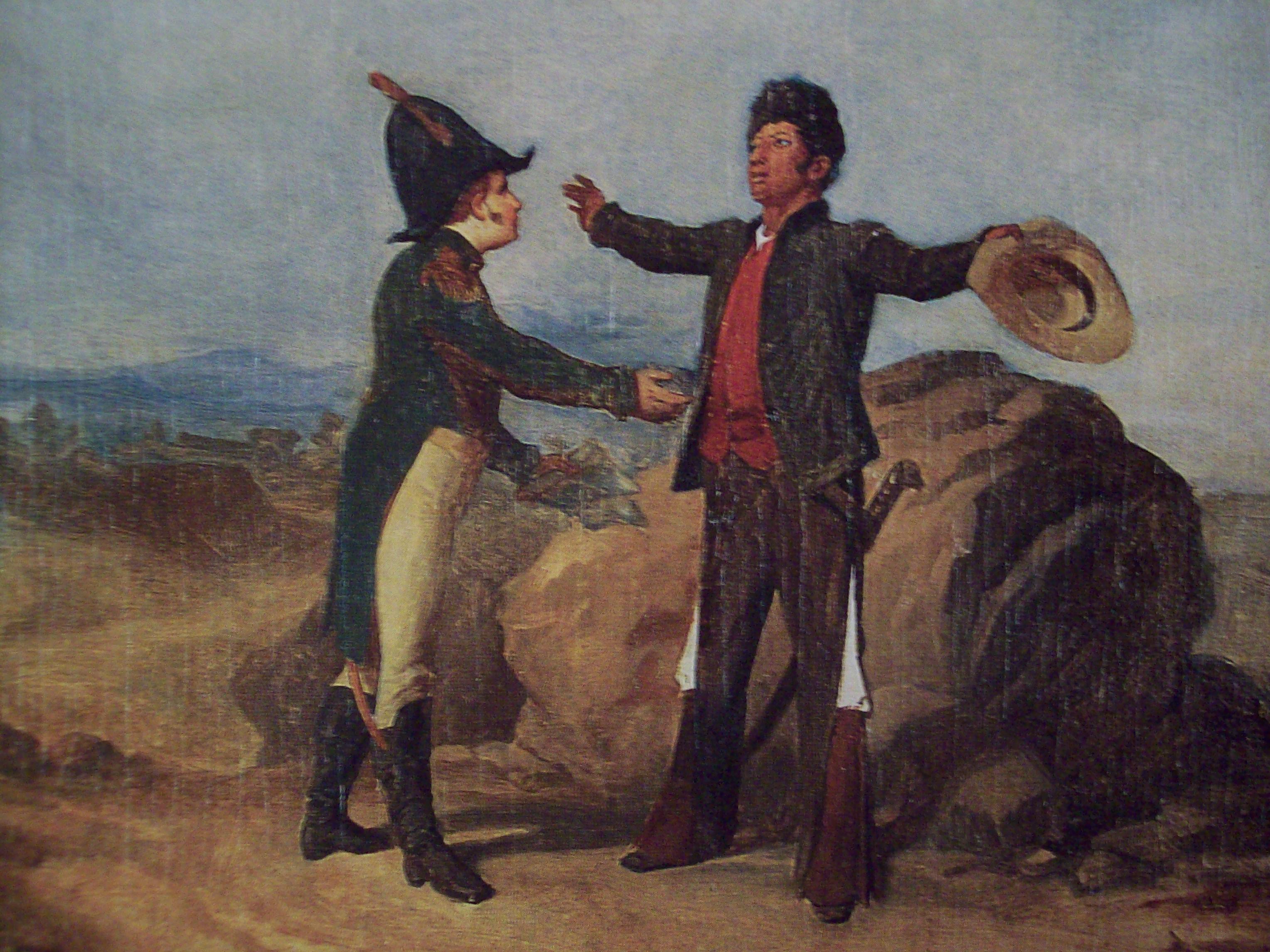
On January 14, 1831, under the pretense of hospitality, Picaluga invited Guerrero aboard the Colombo for a meal, accompanied by Manuel Primo Tapia and Manuel Zavala. As they boarded the ship, two cannon shots were fired—presented as a salute, but in reality a prearranged signal confirming that the trap had been sprung.
The Colombo then sailed toward Huatulco. Along the journey, Picaluga informed a passing vessel that “the bird was in the cage.” Guerrero was soon handed over to government forces, transferred to land, subjected to a hasty military trial, and sentenced to death. On February 14, 1831, Vicente Guerrero was executed in Cuilápam, Oaxaca.
Condemnation and Infamy
The Mexican public never forgave Picaluga. His name became synonymous with treachery, and the term picalugada entered popular language as a synonym for betrayal. Both Mexican and Italian authorities declared him a bandit, and in 1836 a Genoese admiralty court sentenced him to death in absentia.
Yet Picaluga had already disappeared.
A Hidden Life in Mexico
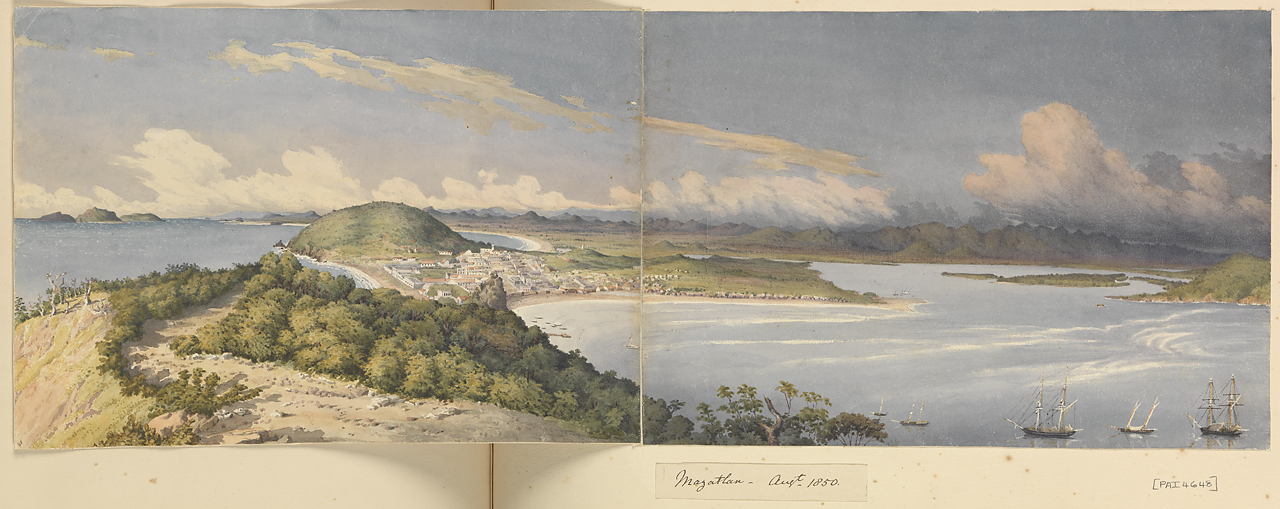
Decades later, historical research revealed a surprising truth: Picaluga never fled abroad. Under the alias Juan Pazador, he traveled through San Blas and Tepic before settling in Mazatlán, Sinaloa. There, he married Cruz Flores, a relative of a wealthy Spanish merchant, and established a trading house.
For a time, he lived in relative comfort. However, failed investments in the brazilwood trade and an increasing addiction to gambling eventually led him to financial ruin.
A Quiet End
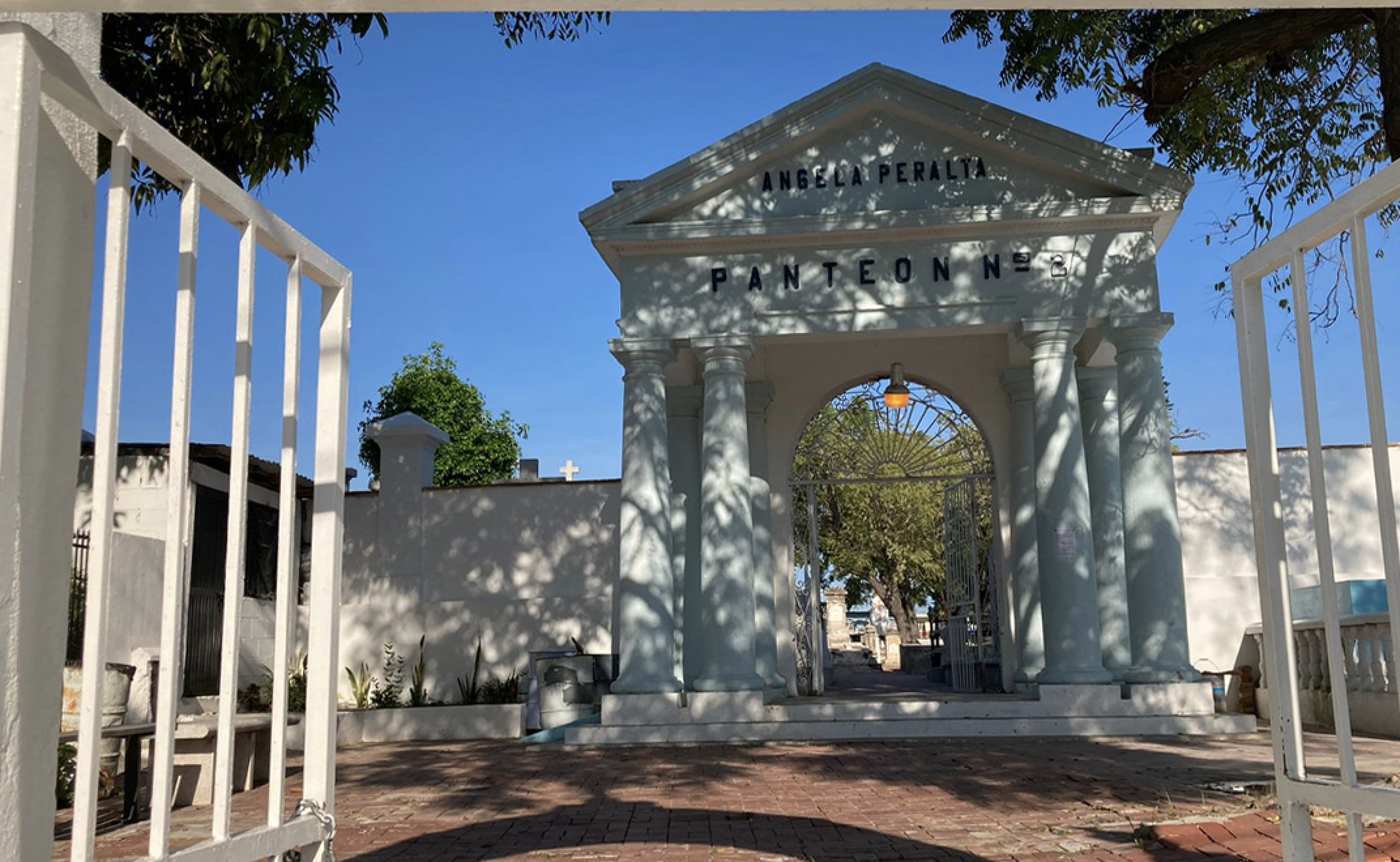
Crushed by debt and disgrace, Francisco Picaluga—living as Juan Pazador—took his own life on March 29, 1859. He was buried in Pantheon Number 1 at the Ángela Peralta Cemetery in Mazatlán.
He left behind no direct descendants, only a family marked by poverty and silence. History, however, never forgot him.