



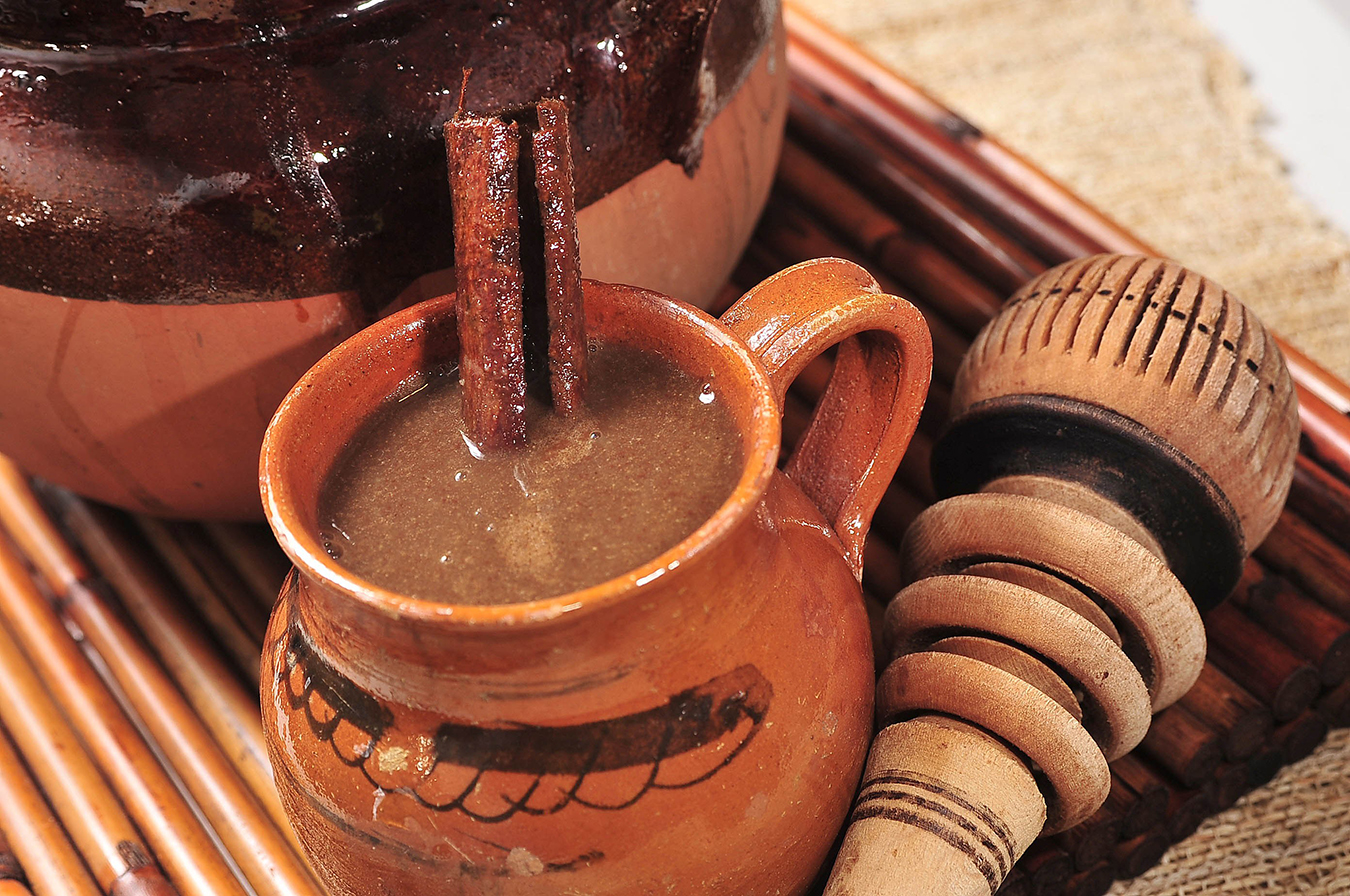
By Maaike Hoekstra, The Flavor Teller
Winter in Mazatlán: A Local Tradition
Winter has finally arrived in Mazatlán—believe it or not! If you’re visiting from a cooler climate, our version of “winter” might still feel like summer to you. But for those of us who live here year-round, the shift from scorching hot to pleasantly warm is unmistakable.
There’s another sure sign locals use to know the season has changed. It’s not falling leaves or shifting tides. The real marker of winter in Mazatlán is when Atole vendors start popping up on street corners across the city. It may sound like an unusual way to announce the season, but this beloved local drink is only sold during the cooler months.
What is Atole?

So, what exactly is Atole (pronounced ah-TOH-leh)? It’s a warm, corn-based beverage sweetened with raw cane sugar. Ancient Mexican civilizations enjoyed it as a hot corn pudding called “atolli,” famous for the energy it provided. Today, you’ll find Atole in all kinds of flavors—cinnamon, tamarind, guava, and more.
In Mazatlán, the most common flavor is Atole de Pinole, which is roasted ground corn. Its taste can be compared to salted caramel. The only way to try other types of atole in Mazatlán is to make it yourself. And guess what: it isn’t difficult at all! Let’s give it a try and sip the winter season like a local.
Atole de Tamarindo (Tamarind Atole)
Tamarind atole is a big favorite in México (and honestly, it’s my favorite atole). There’s just something about that sweet-and-tangy combo that people can’t resist. Tamarind grows mainly in México’s tropical areas—places like Jalisco and Colima—where the trees get impressively tall. They’re full of thick, leafy branches that sway beautifully whenever there’s a good breeze.
If you’ve spent any time in Mexico, you’ve probably seen tamarind in all kinds of treats. One of the most common is the classic candy made from little balls of tamarind paste rolled in sugar—or in chili powder if you like things spicy. You’ll also find tamarind in drinks, sauces, and even a few stews. Plus, it’s a natural source of vitamin B and calcium, so you can feel good about enjoying it.
Ingredients:
-
150 gr (5 oz) tamarind pods, peeled
-
6 cups water
-
¾ cup piloncillo sugar
-
¼ kilo masa corn dough
Instructions:
-
In a small saucepan, bring two cups of water to a boil. Add the peeled tamarind pods and simmer for 5 minutes. Leave to cool slightly.
-
Press the cooked tamarind and liquid through a strainer into a larger pan. You can use a spoon or your hands. Discard the seeds and fibers.
-
Bring the strained tamarind with its liquid, piloncillo sugar cone, and remaining four cups of water to a boil. Cook until the piloncillo sugar has dissolved.
-
Add the masa corn dough to a blender with a splash of water and blend to dissolve the masa well.
-
Slowly add the masa mixture into the pan with tamarind, stirring constantly. Continue stirring for about 5 minutes until the mixture thickens.
-
If it’s too thick, add more water.
SERVES 6 CUPS

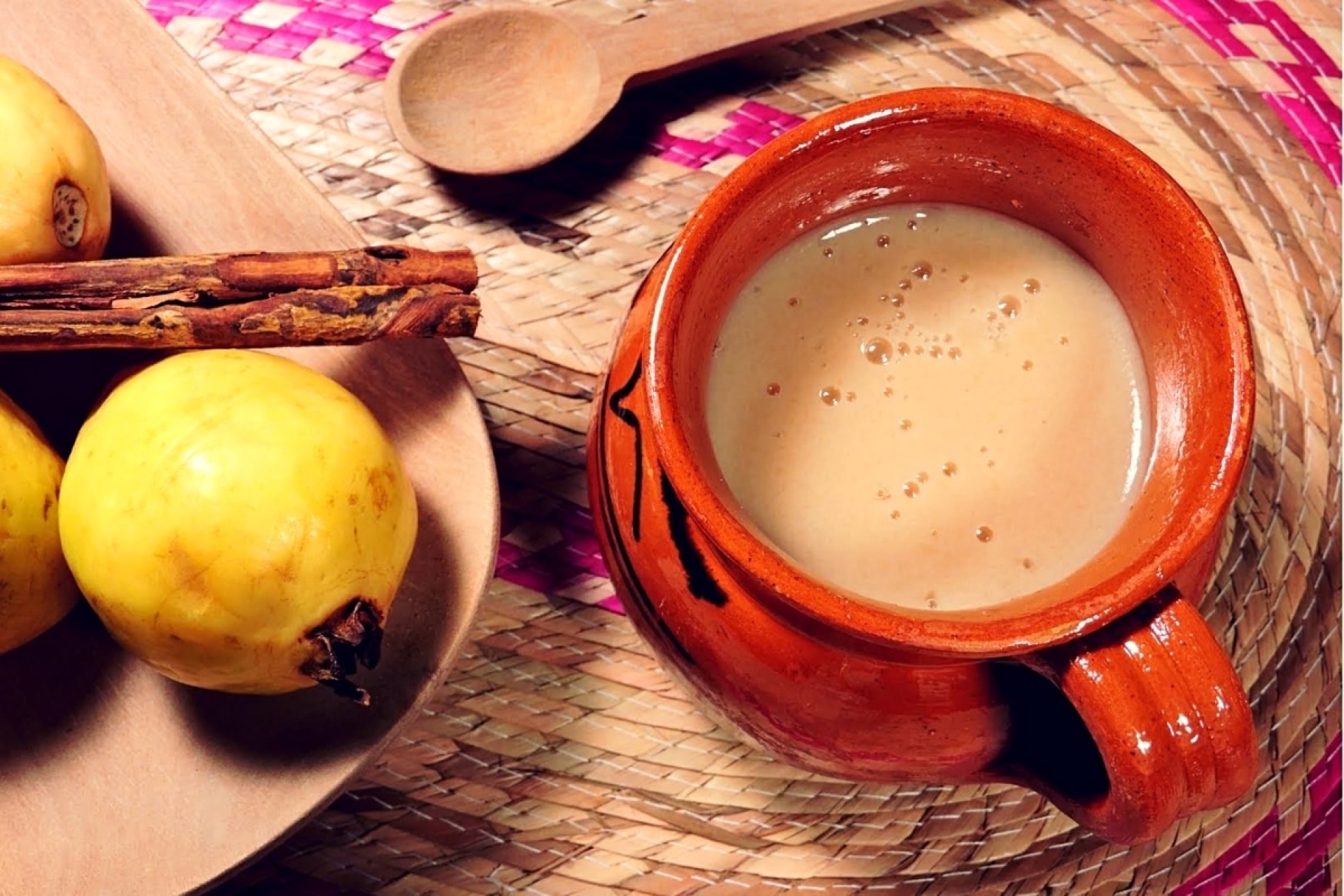
Atole de Guayaba con Leche (Guava Milk Atole)
Guavas, or Guayabas in Spanish, are very popular during the holiday season because they are one of the ingredients in our famous Christmas punch and the syrup for Buñuelos. Nowadays, they are sold year-round, and locals eat them raw, like other fresh seasonal fruits, in guava cheesecake, in Agua Fresca, or to make guava atole.
Ingredients:
-
400 grams (14 oz) guayabas, cut in quarters
-
200 grams piloncillo sugar
-
1 cinnamon stick
-
¼ tsp baking soda
-
225 grams (½ lb) masa corn dough
-
6 cups water
-
1 can Carnation milk
Instructions:
-
In a large pan, add two cups of water and the cinnamon stick, bringing it to a boil until fragrant.
-
Add the guayabas and simmer for 15 minutes until the fruit has softened. Remove from the stove to cool. Remove the cinnamon stick.
-
Pass the cooked guayabas and liquid through a blender and blend until smooth. Strain the mixture into the pan and discard the seeds.
-
Place the masa corn dough in the blender with 1 cup of water and blend until smooth.
-
Heat the guayaba mixture with three more cups of water on medium heat. After 10 minutes, add the baking soda and stir until the bubbles disappear.
-
Slowly add the masa mixture into the pan, stirring constantly for 15 minutes.
-
Finally, add the Carnation milk and stir for 5 minutes.
SERVES 6 CUPS
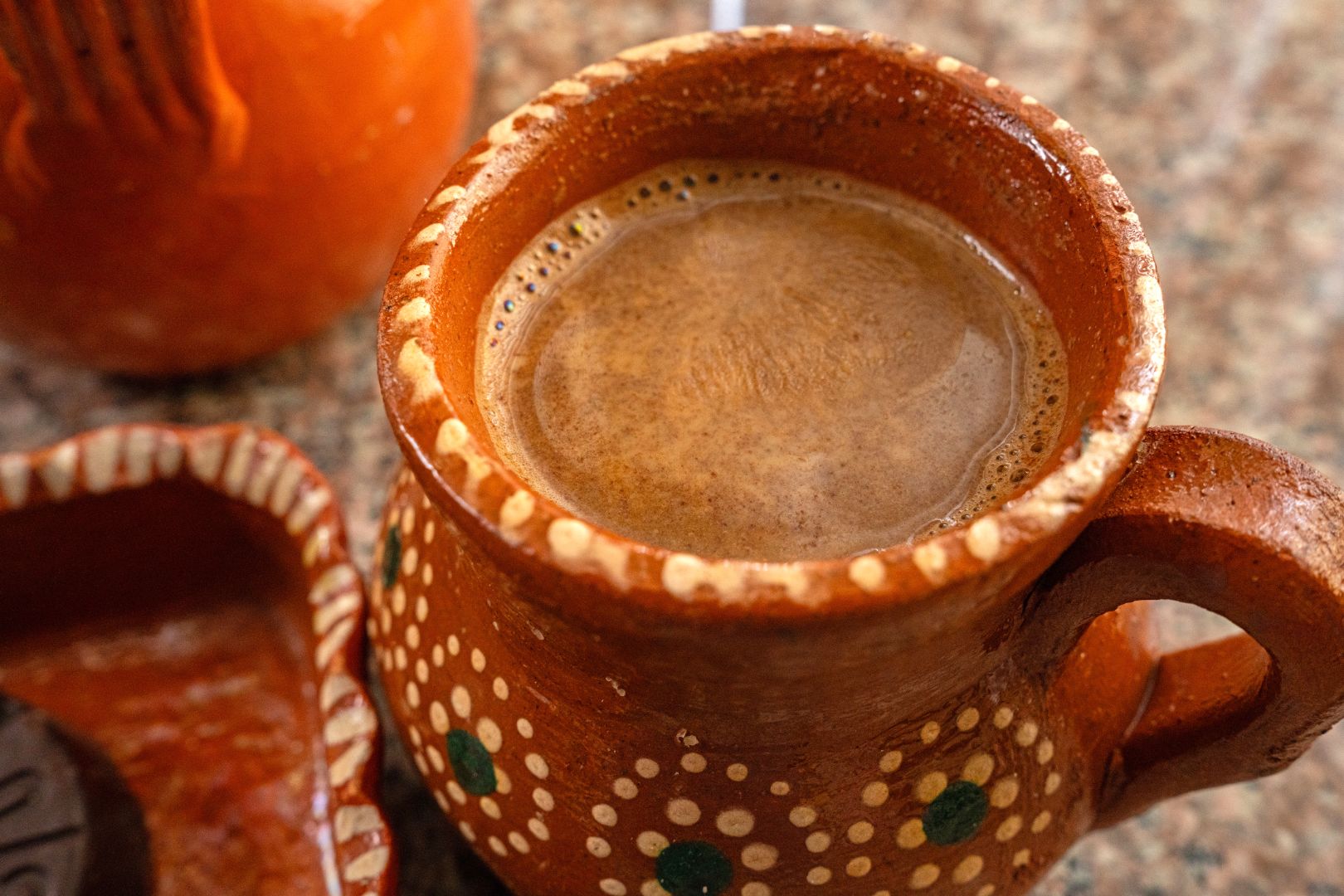
Champurrado – Chocolate Atole
How can atole get any better? By adding chocolate, of course! Meet ‘Champurrado’, the atole you wished you had heard about before.
Where does the name champurrado come from? It has a charming origin. According to the Mexican Academy of Language, it comes from champurrar, a verb people used to describe mixing liquids of different textures. Some say the word even echoes the sound of the molinillo (a wooden whisk for hot chocolate) tapping the sides of the pot—chap, chap, chap—as the drink thickens. It’s the kind of sound that makes you think of kitchens filled with warmth, family chatter, and the promise of something delicious.
Ingredients:
-
6 cups water
-
½ cup piloncillo
-
1 cinnamon stick
-
2 Mexican chocolate tablets (e.g. Abuelita)
-
¼ kilo masa corn dough
Instructions:
-
Bring 5 cups of water to a boil in a large pan and add the piloncillo and cinnamon stick. Simmer until the piloncillo has dissolved.
-
Add the two Mexican chocolate tablets and simmer until the chocolate has dissolved.
-
Put the masa and 1 cup of water into a blender and mix until smooth.
-
Slowly add the masa mixture into the pan, stirring continuously for 15 minutes or until the atole has thickened.
SERVES 6 CUPS
Connect with Mazatlán Through Flavor
Do you crave authentic connection, culinary surprises, and vibrant culture? Let Flavor Teller show you the real Mazatlán, one bite at a time. You’ll get access to vendors that locals love—without the guesswork.
Check out all our food tours online (www.flavorteller.com) or contact us via email at flavorteller@gmail.com.