



By: Sophia Boccard
Imagine this: you’re with your friends at the beach, sipping (or are you guzzling?) some Pacifico beers, chilling out and the calm sea calls out to you. Seeing no cause for concern, you decide to start wading into the waters, maybe you’ve got some clothes on or you’re in your bathing suit, and you start letting the water carry you out a little ways from the shore. Next thing you know, you glance back and you are a long way from the shore and you start to panic. Your arms are thrashing as you gasp for air trying to stay above water, screaming out for help, to anyone who can hear you. Here’s a moment where what seemed like what should have been a pleasant outing with friends turned dangerously fatal that is until the next thing you notice is your savior, the lifeguard.
Lifeguard has such a funny ring to it. The word almost sounds like it should describe what a bodyguard is to a VIP. And yet, it is associated to some of the most valuable people in Mazatlan who are watching all of our backs as we drunkenly stumble into the water assuming the sea is safer than it is. It seems most apropos to call them the invisible line of defense between us and the sea.
The Rescue Begins Before Anyone Notices
Everything starts with observation. Long before anyone on the beach notices anything is wrong, the lifeguard has already anticipated the danger. They scan the sea and catch a glimpse of a swimmer who has stopped making forward progress. Their arms have shifted from strokes to desperate swipes at the surface. There is no grey area in that moment and a rescue is underway.
Instantly, either through hand signals or radio, the lifeguard connects with their partner. All hands are on deck and every member of the squad knows their role. The moment one lifeguard signals they’re entering the water, the nearest stations mobilize toward the location and the jet ski is already moving.
Reading the Water
Entry into the water is not a straight sprint. The lifeguard reads the current and the waves in real time, calculating the fastest route that won’t exhaust him before he even reaches the victim. Their equipment is always kept out in front – the first rule in the water is to protect yourself.
Approach is from the side or from behind. A panicked person in open water is not thinking clearly and may grab at anything, including the person trying to save them, and drag them both under. Before any physical contact, there is a voice. Tranquilo. Agárrate. Calm down. Hold on. The moment the victim’s hands find the flotation device, something typically shifts for them. While the panic doesn’t disappear, it does loosen. They now have something to hold onto, finally.
Bringing Everyone Home Safely
Getting back to shore is its own calculation. A straight line back to the entry point is rarely the answer. The lifeguard needs to read the water again to find a calmer corridor, usually working laterally until the sea cooperates.
Once back on solid ground, the rescue is still not over and the focus shifts. A quick assessment is completed in seconds, is the victim breathing, have they lost consciousness, did they swallow water? If everything checks out, the victim is stabilized and placed in the recovery position. If not, and the situation is more serious, the medical response team is activated without hesitation.
«For us,» says Commandante Gustavo Espinoza Bastidas, «the rescue doesn’t end until the person is out of danger.» But as he points out, most of their work happens long before anyone enters the water. «Many people think a lifeguard’s job is only to rescue — but most of our work is in anticipating the risk.»
The Training Behind the Uniform
Joining the rescue squad requires anywhere from weeks to months of intensive preparation depending on the individual. These individuals train in open water with real currents — not a pool — and are certified in open water rescues, swift water rescue, CPR, first aid, jet ski operations, and emergency response. The physical demands are relentless: swimming long distances, pulling someone out of the water, and running on sand, all in a single day.
Beyond needing to be in top physical shape and have the proper technique training, probably the most important credential to being a lifeguard is mental training of being able to handle dangerous situations with a clear head under constant immense pressure. Decisions must be made within seconds as someone’s life is on the line. Preparation and training are continuous as there is no off-season for beach goers.
How Beachgoers Can Stay Safe
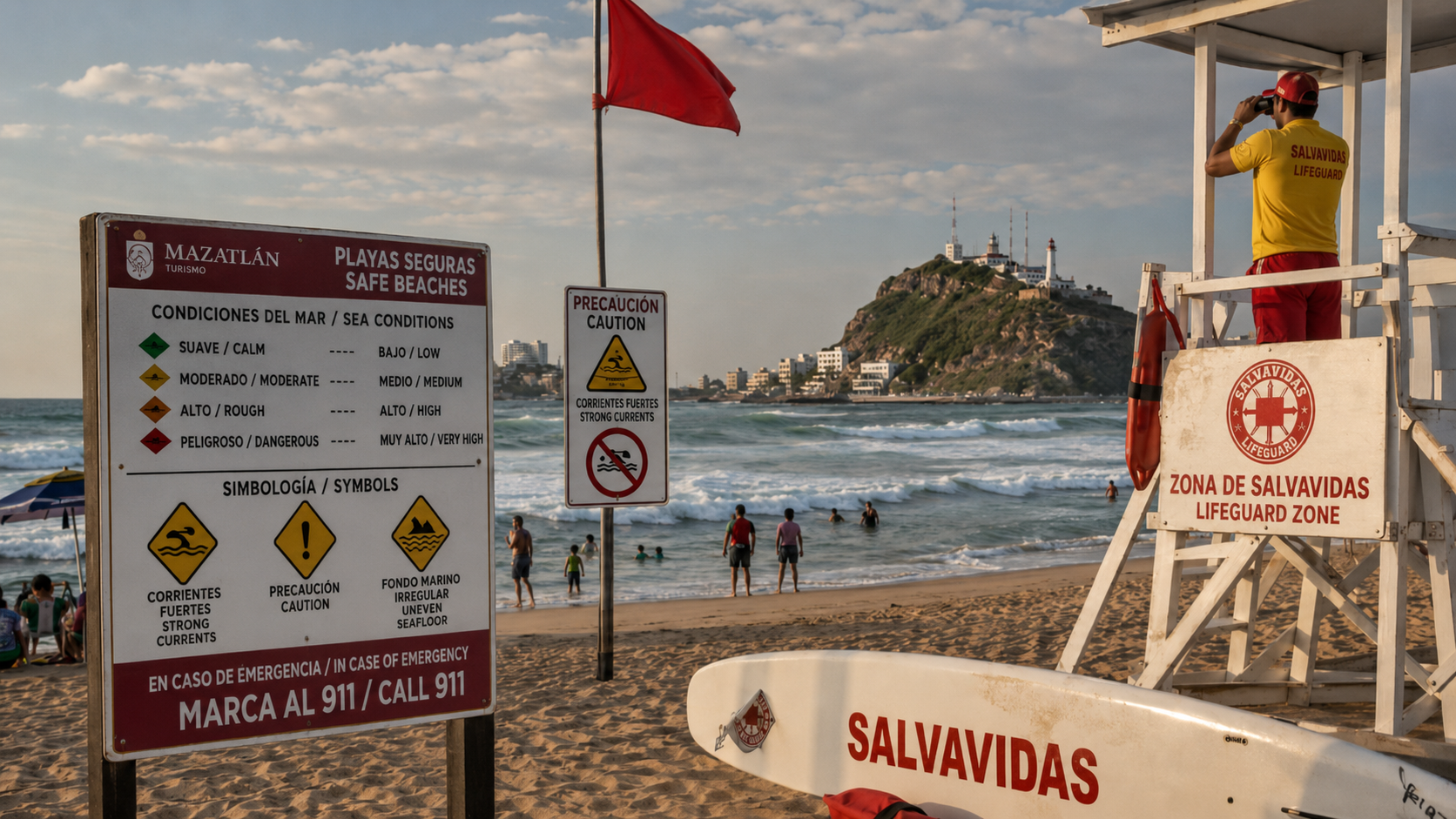
While it is universally understood that no one wants to find themselves in a dangerous situation, there are preventative measures one can take when frequenting the beach. Paying attention to the warning flags is a priority. Swimming under the influence is a common and dangerous mistake. Entering the waters with inflatables or everyday clothing can be dangerous. Getting caught in a current and trying to swim back to shore is also truly dangerous. But the one that takes only seconds is losing sight of your children. Understanding the flag system before you hit the beach could save your life – check out the guide below.
Respect for Those Who Answer the Call
The ocean is both magnificent and dangerous. Its sheer vastness has enamored mankind for centuries and yet it’s still not fully discovered and understood. And yet, these lifeguards are willing to go day in and day out into the open water to save a beachgoer who finds themselves in a dangerous situation within seconds. For that, these lifeguards should get our thanks and respect for the courage to be present.