



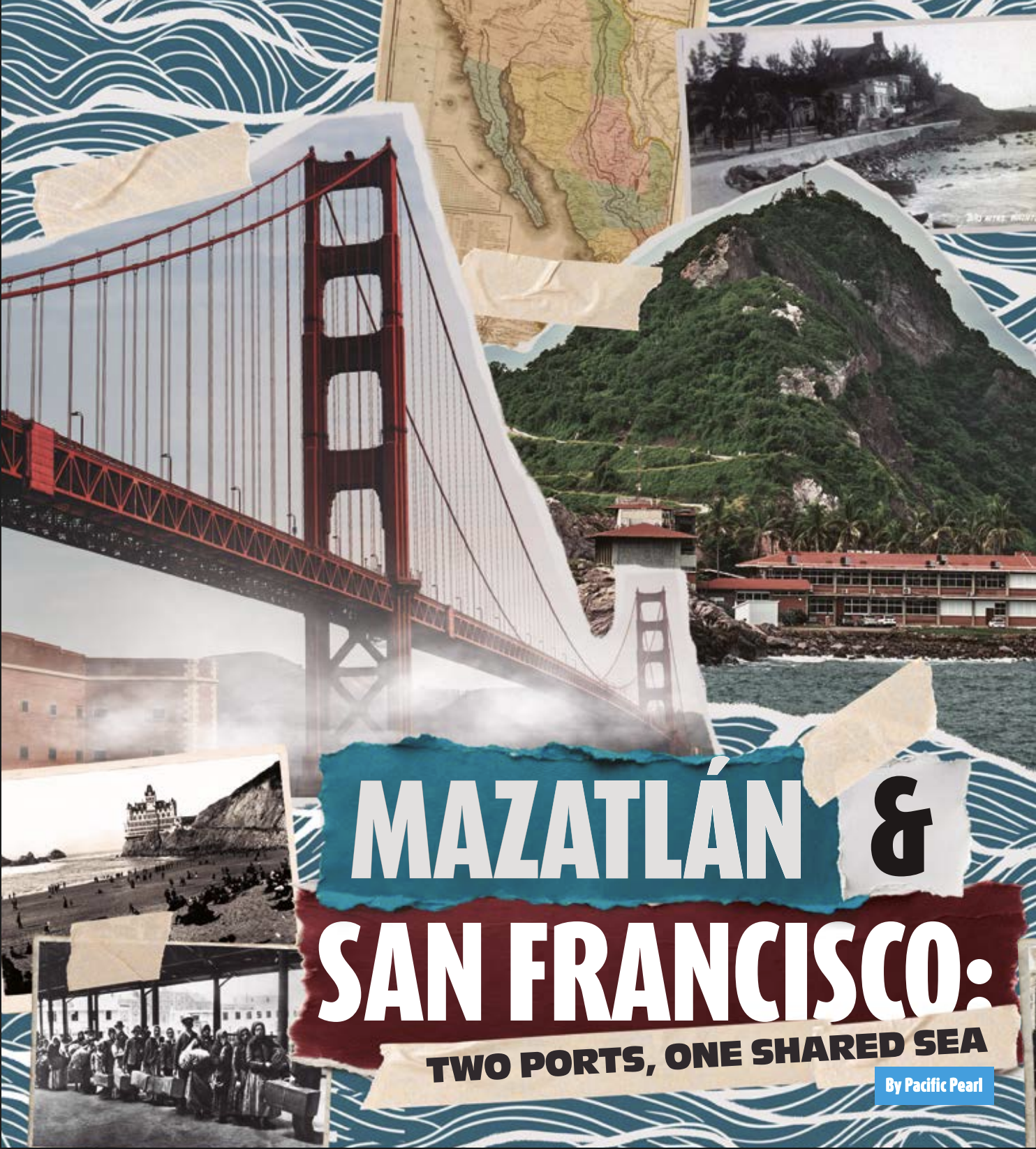
Some cities feel connected long before anyone draws a map between them. Mazatlán and San Francisco are two ports that have spent more than a century looking toward each other across the same vast Pacific—not as strangers, but as distant relatives linked by tides, trade, courage, and hope.
One emerges from tropical warmth, the other rises through cool fog, yet both share a rhythm shaped by the sea. History books may tell two separate stories, but the ocean has always known they belong to the same chapter.
When the Pacific Was the Only Road
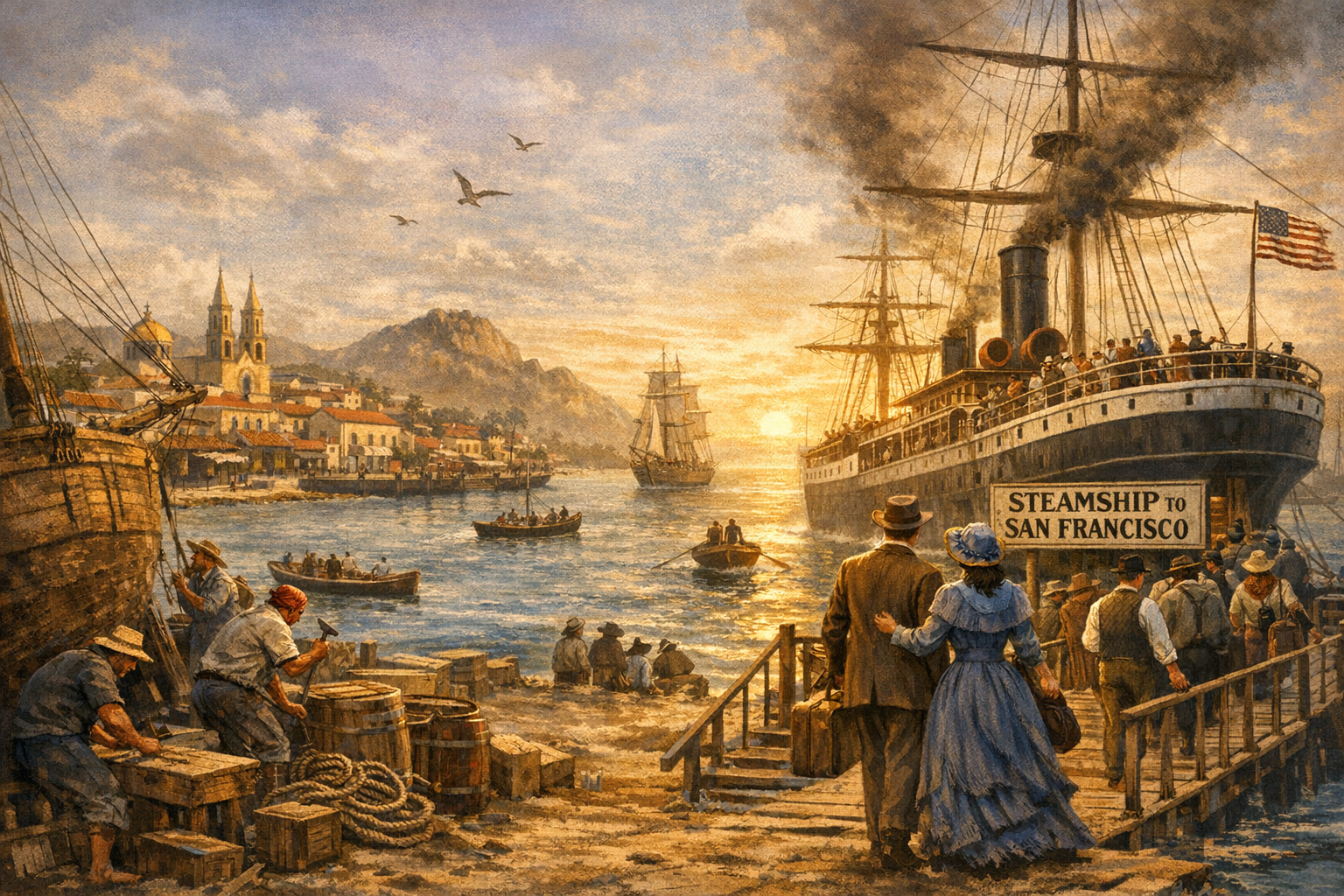
Long before airplanes or highways, the Pacific Ocean was the great connector—a place of daring, uncertainty, and possibility. Along this sweeping maritime route, Mazatlán became a vital stop: a bright, welcoming harbor for ships arriving from South and Central America. Crews rested, repaired their vessels, and prepared for the long journey north.
From this same port, thousands boarded steamships bound for San Francisco—a young city of ambition, growing fast, dreaming big, and calling out to those searching for a new beginning. Without ceremony, Mazatlán became a gateway. And San Francisco became a promise.
Cities Built by Those Who Arrived From Elsewhere
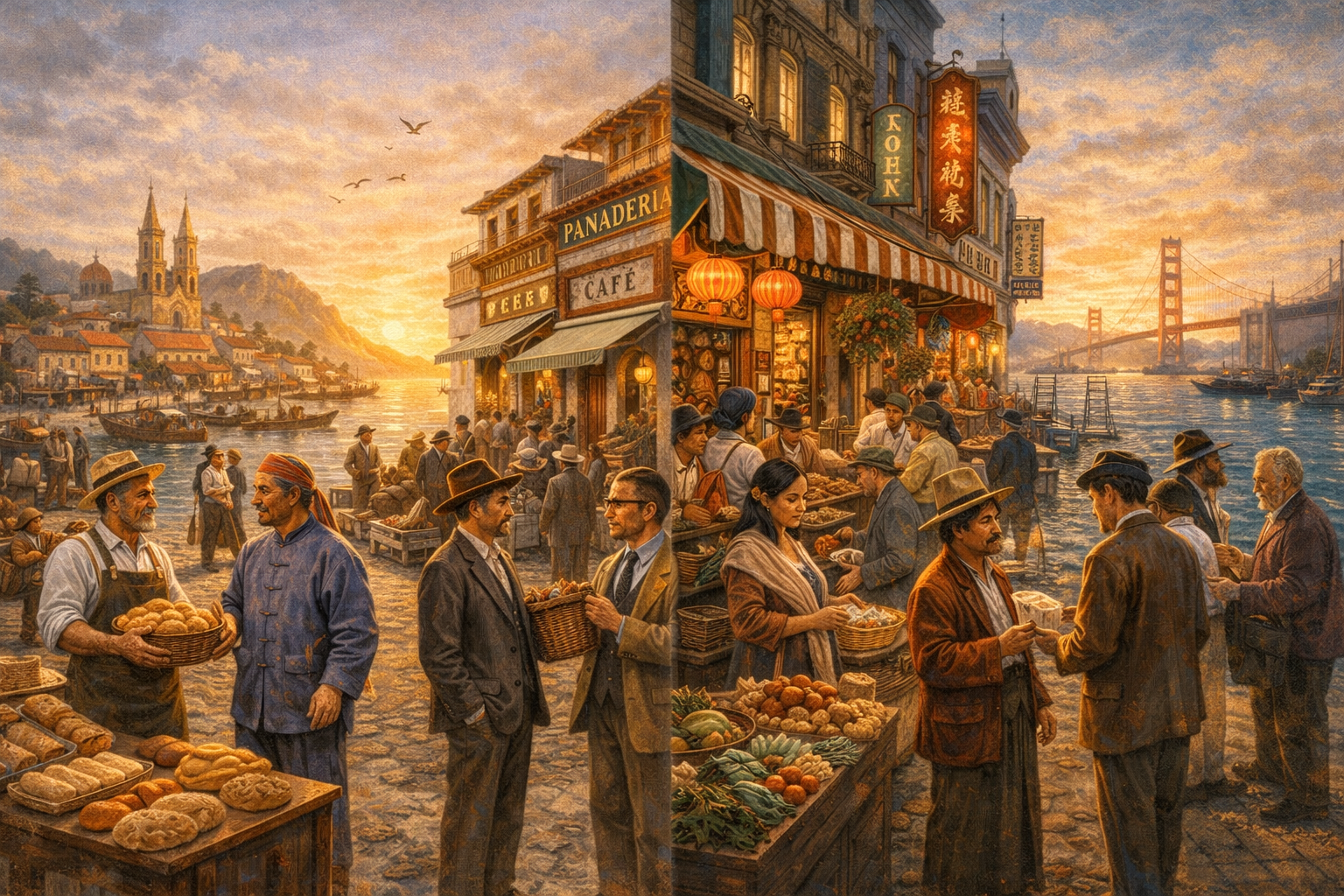
Both ports grew thanks to migration—people who crossed oceans to plant new roots.
In Mazatlán, Germans, French, Chinese, Spaniards, and others opened shops, bakeries, trading houses, and cafés. Their legacy still colors the Historic Center’s streets and architecture.
In San Francisco, Italians, Irish, Latin Americans, and Asians shaped a city that would become one of the most diverse and vibrant in the world.
Between the two ports moved goods—coffee, fabrics, spices, wood—but also stories, hopes, and handwritten letters carried across the waves.
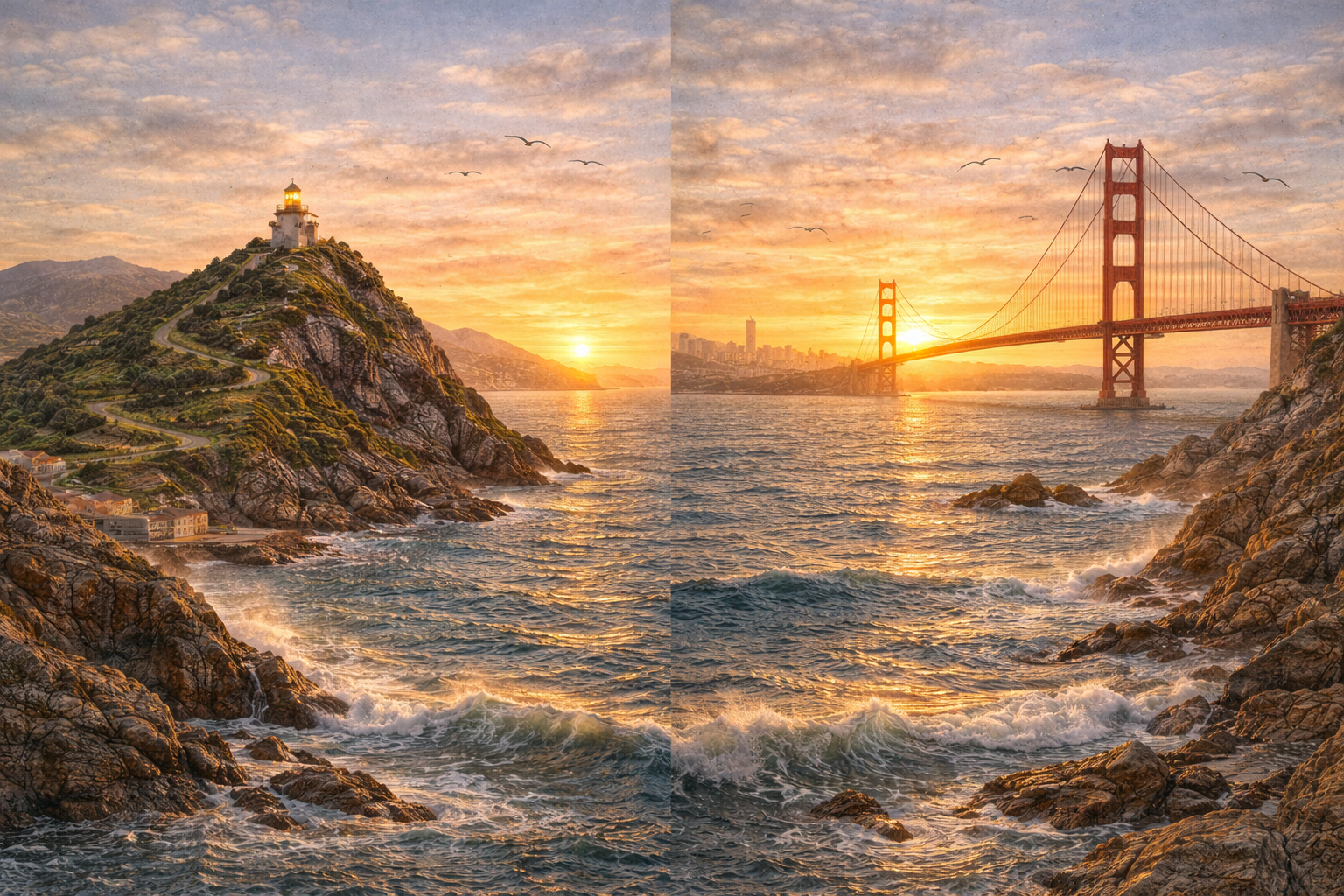
Perhaps this is why dawn at Olas Altas and dusk along the San Francisco Marina feel strangely alike: the same heartbeat of the Pacific echoing on opposite shores.
The Invisible Bonds That Never Needed a Name
Some connections don’t require monuments or treaties. They simply exist, carried quietly through generations.
Mazatlán sent fishermen, artisans, merchants, musicians.
San Francisco welcomed dreamers and workers seeking a wider horizon.
In return, ideas, technology, food, and culture flowed back toward Mexico.
Official histories may overlook it, but these two cities have shaped each other far more than we often acknowledge.
The Blue Bridge That Still Connects Them
Even in a modern world of instant flights and digital messages, one truth remains: stand by the ocean in Mazatlán or along the cliffs of San Francisco, and the horizon feels like a shared home.
The waves that soften Playa Norte are kin to the waves that pound at Lands End. The warm glow on Mazatlán’s lighthouse mirrors the golden light that washes over the Golden Gate.
Miles apart—yet bound by a single moving force: the sea that belongs to both.
A Dialogue That Continues Today
As Mazatlán experiences a cultural and economic renaissance, and San Francisco refines itself once again, the relationship between the two ports continues to grow.
Tourism, gastronomy, business investment, migration, and a new generation of travelers all find bridges between these coastal worlds.
Perhaps they were never meant to be separate. Perhaps Mazatlán and San Francisco have always been two reflections in the same blue mirror—ports built on courage, curiosity, and the belief that life becomes richer when people choose to cross oceans.