



By Lorenzo Covarrubias, PhD in Cultural Anthropology
Anthropologists are a unique crowd. Instead of focusing on economics, religion, political or social structures as other social scientists may…we/they often emphasize other elements to get at the heart of a group, society or nation. Two of these elements that are key to such endeavor include food…and dance. Yes, through music, dance, and song anthropologists of music and dance—also known as ethnomusicologists—are able to piece together the cultural histories of the peoples, regions or nations/countries that produce them. Such is not the intent in this case, but I did want to make sure you the reader get why a country’s folklore (whether oral, written, or danced to) is so relevant in today’s understanding of a country such as México and our state of Sinaloa.
Mexican Folk Dance as a Cultural and Artistic Attraction
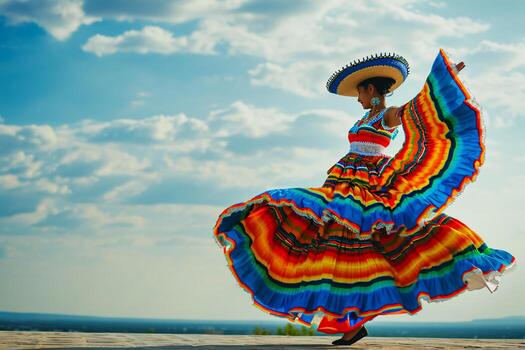
Also referred to as danza folclórica, baile folclórico, or baile regional, Mexican folk dance has drawn the attention of tourists, researchers, musicians, policy makers and all sorts of artists such as writers, painters, photographers, illustrators and the like. And with good reason as México with its vast geographic and cultural regions produces a myriad of folk dances similar to ALL of Europe! No wonder Mazatlán’s Canadian and American residents and visitors can’t get enough…whether is an Aztec dancer in the Plazuela Machado, high school dancers in the Plaza de la República, choreographed representations in the Teatro Universidad or superb spectacles in the Teatro Peralta.
Mazatlán as a Hub for Folkloric Dance and Cultural Expression
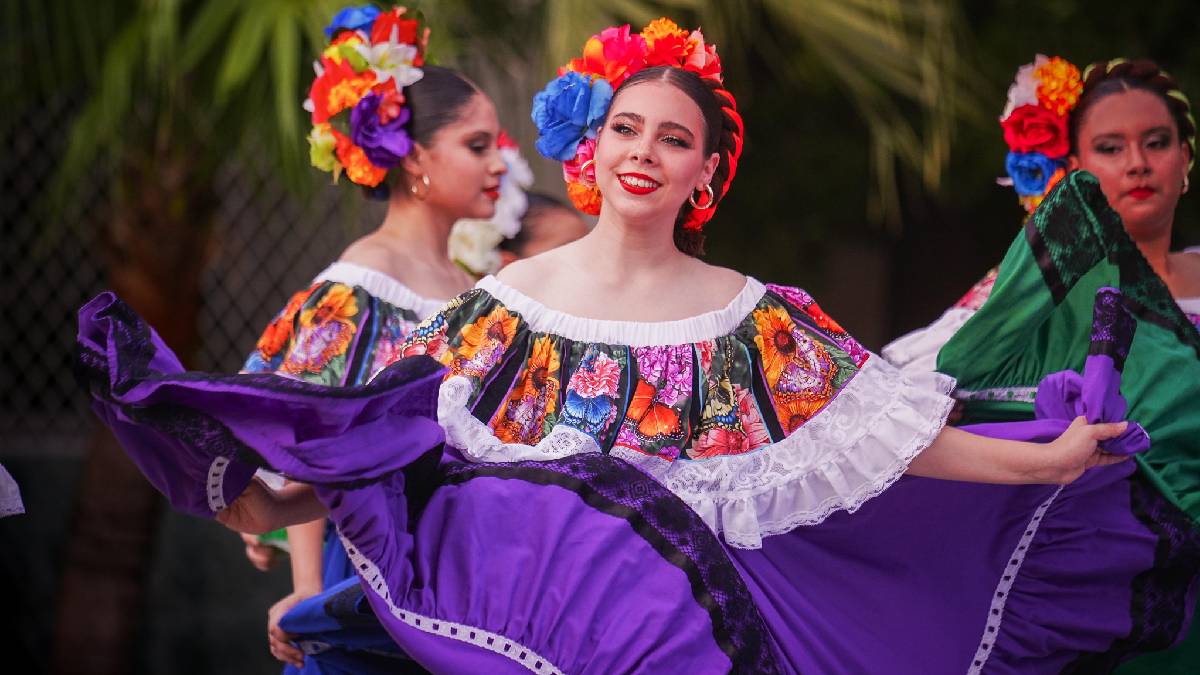
Once again, we are fortunate to live in this port city. Mazatlán acts as a magnet to the other towns and municipalities in the state and thus attracts the best that each can offer. And, it also has numerous folclórico groups ranging from independent, university, educational, institutional, and state level. In fact, it is somewhat mandatory or strongly expected that K-12 schools include folclórico dances year-round in their curriculum. On key days such as 5 de Mayo, Mother’s Day, Independence Day, for example, Mazatlán explodes with folclórico performances throughout the city in schools, plazuelas, stadiums, city parks and government venues.
Regional Dances of Northern and Coastal Mexico
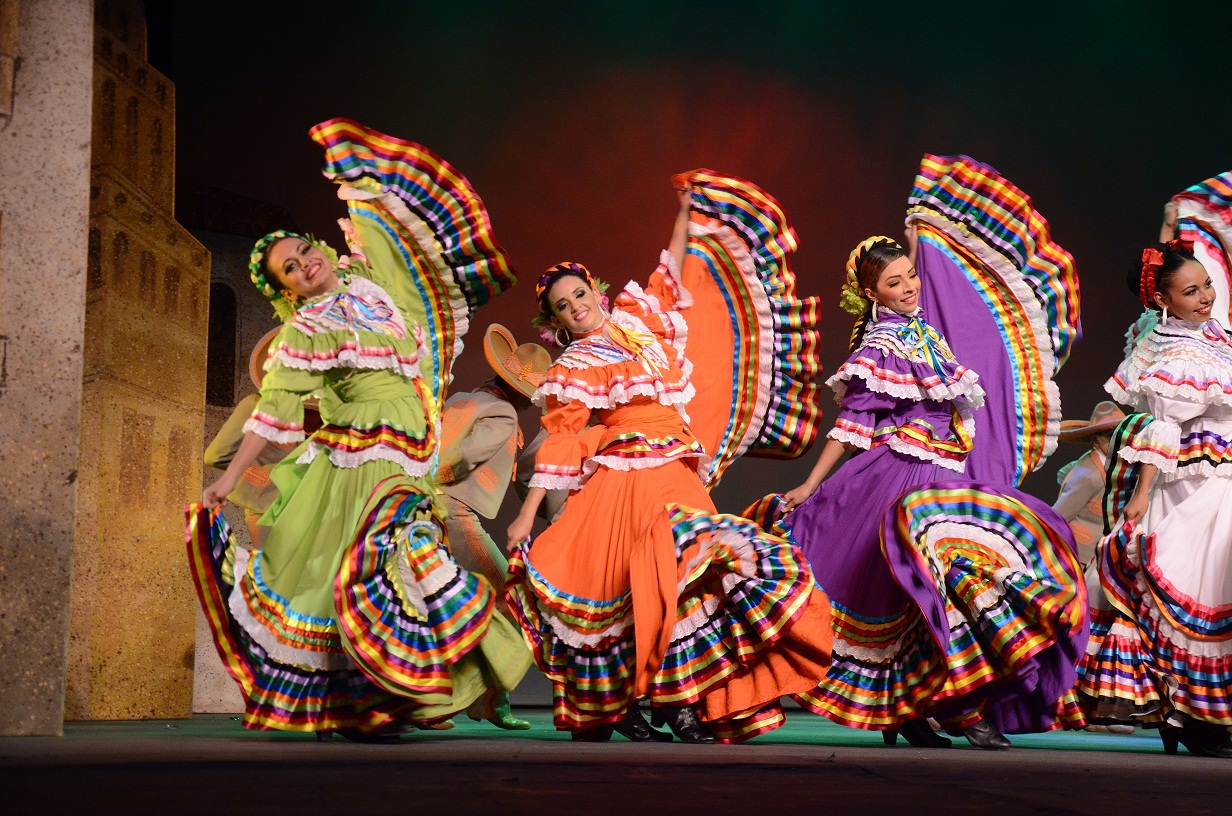
In a land where banda is queen there is plenty of opportunities to watch it danced. The state’s official and unofficial anthem of “El Sinaloense” is by far the most danced folclórico festive-style of banda music. “India Bonita” is a mellow piece, and when danced folclórico style it follows a storyline of indigenous women beauty and grace. A favorite of mine is “Noches de Mazatlán”, a bolero themed song about finding love among the palm trees and silvery nights at sea. Grupo Folklorico Huehuecoyotl joins foces with Grupo Danzón Al Vuelo, both led by instructor Dulce Uribe Paredes out of Cultura UAS Zona Sur. This is a unique blend as danzón is central to Veracruz folk dances, but definitely not Sinaloa. I had the pleasure of dancing with the group once (I am a danzón dancer) at the Teatro Universitario and it was quite the joy to do so.
Regional Dance Traditions Across Mexico’s States
Sinaloa and Sonora don’t just share a border. They also share “La Danza del Venado”. Out of the folk traditions of the Mayo and Yaqui Indians, this dance ceremony previous to a deer hunt is now a majestic rendering of an animal seeking to survive but ultimately hunted. In this dance, emotion and suffering take center stage, albeit with stoic yet expressive dancers. The neighbor to the south, Nayarit, is often represented by “La Danza de los Machetes” in which skillful dancers bang machetes between and underneath their legs as they jump, to the delight of the crowd. This dance refers to the sugarcane cutters of old…or now. In Michoacán, “La Danza de los Viejitos” is a favorite one. It depicts several old men slowly dancing due to age, with matching attires and masks. Up north, where folclórico and polka go together, “Jesusita en Chihuahua” is a must. Think polka dance meets country line dancing, and you got it.
Jalisco and the Tradition of El Jarabe Tapatío
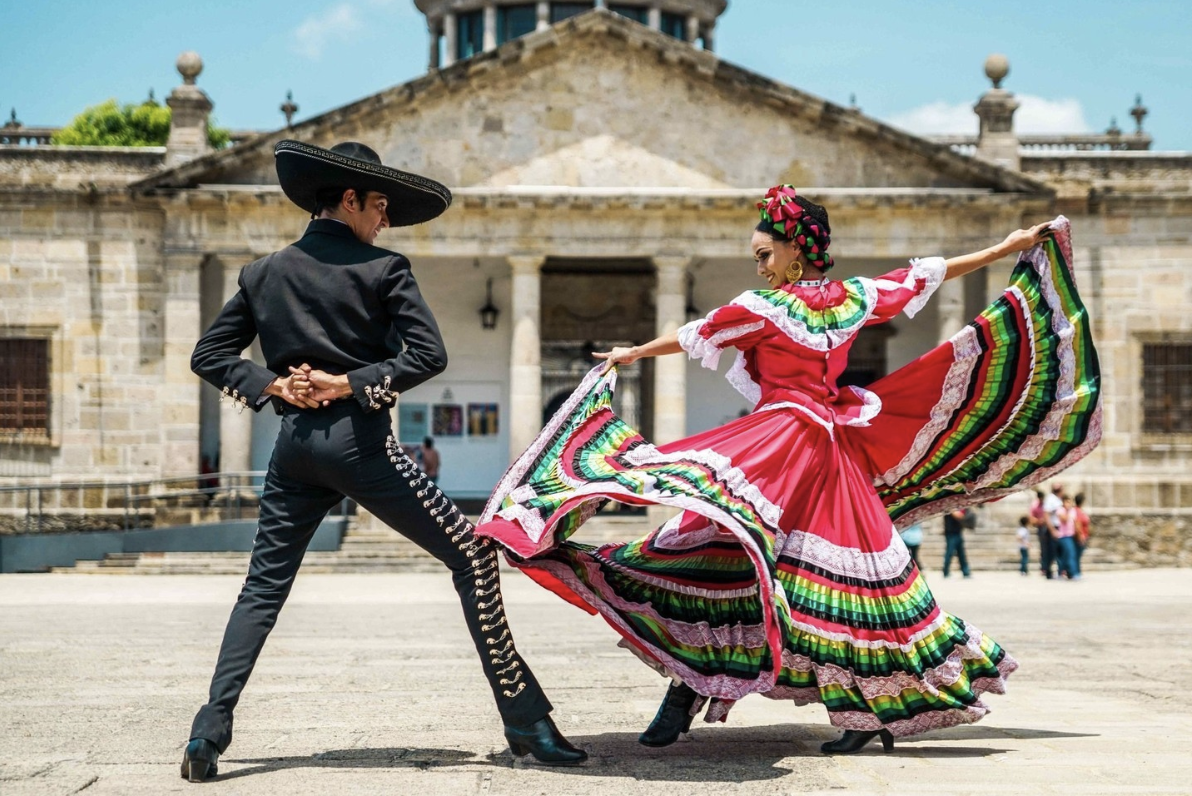
Jalisco (as well as Colima and Aguascalientes), where mariachi rules “El Jarabe Tapatío” is guaranteed. Known childishly to English-speaking audiences as the Mexican hat dance, this folk dance repeats an often theme of Mexican folk dances…courtship. With powerful and intricate footwork male dancers follow (court) female dancers who with deft footwork peel away. Ultimately, the courtship works and both end with a kiss…behind the charro hat! Strangely enough, it was a Russian ballerina, Anna Pavlova, who first popularized “El Jarabe Tapatío” internationally in the early part of the 20th Century, after having witnessed it in a visit to México.
Amalia Hernández and the Evolution of Mexican Folk Dance
Just as Alicia Alonso did for ballet in Cuba, in México it was Amalia Hernandez who is associated with the rise and importance of Mexican folk dance in the 20th Century. Major historical events such as the Mexican Independence of 1810 or the Mexican Revolution one hundred years later, gave folclórico boosts, but they were short lived as the new political elite soon gravitated to the taste notions of their American and European counterparts. Think of folk dances as peoples’ dances, which oftentimes clash with what the elite prefer. For many years, folclórico was referred to as bailes regionales as they were not national yet; meaning they were danced within regions but not outside them. With internal migration, and communication advancements such as television and movies, such dances crossed their own boundaries.
The Cultural Value of Folk Dance in Mazatlán Today
Folk dances worldwide have a lot to offer, and México is not the exception. Be ready to catch the next folclórico event in our city of Mazatlán as they happen often. These celebrations of peoples’ dances are choreographed exquisitely by talented local and invited instructors and choreographers that are truly top in their field. Be bold and attend these spectacular dances and feel the joy of witnessing the end result of generations of performances, great dancers of all ages, and be happy that you’re living in Mazatlán.

