



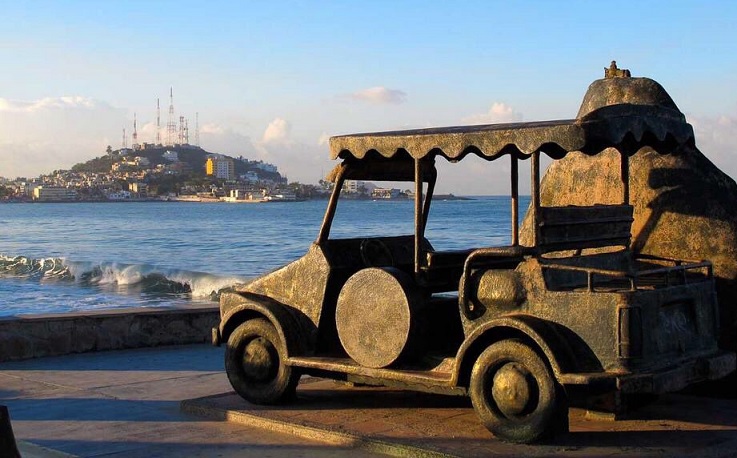
The Soul of the Port
There are cities that are explained through buildings. Mazatlán is explained through movement. It is the unmistakable sound of an engine that seems to breathe. The Pacific breeze touching your face. It is a vehicle that, without ever intending to, became one of the most recognizable urban symbols in Mexico: the Pulmonía.
1965: An Icon is Born
The documented history of the Pulmonía begins in 1965. It first appeared as a local transportation solution just as Mazatlán was emerging as an international tourist destination.
Unlike most transit, it wasn’t born from a corporation or an imported model. It was born here—specifically designed for the port’s streets, its climate, and its people.

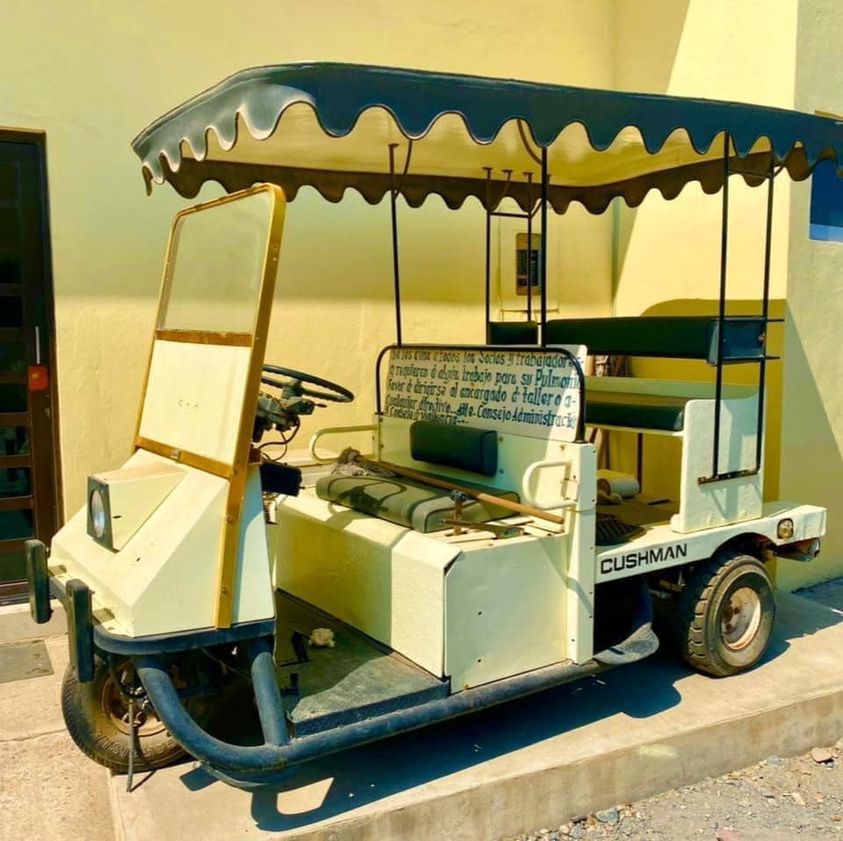
Breaking the Rules of Design
Early Pulmonías were lightweight, open-air vehicles adapted in an almost artisanal way. From the start, their design broke every conventional rule:
-
No doors.
-
No windows.
-
No separation between the passenger and the city.
The «Mechanical Lung»
One of the most fascinating facts is that most Pulmonías are powered by Volkswagen engines, descendants of the legendary Beetle. This explains their:
-
Unmistakable Sound: That distinct «purr» known across the city.
-
Durability: Simple mechanics that keep units running for over 40 years.
-
Identity: The name «Pulmonía» actually refers to the idea of a breathing engine—a mechanical lung with a steady rhythm.
«The Pulmonía connects people to the city instead of separating them from it.»
A Living Legacy
From a few dozen units in the sixties to approximately 700 operating today, these vehicles are a defining element of the urban landscape.
-
Economic Heart: A vital source of income for hundreds of families.
-
The Experience: The driver is more than a pilot; they are a storyteller. For many visitors, their first true introduction to Mazatlán begins inside one.
-
The Backdrop: Whether in the Historic Center, at Plazuela Machado, or along the Malecón, the image of Mazatlán would be incomplete without them.
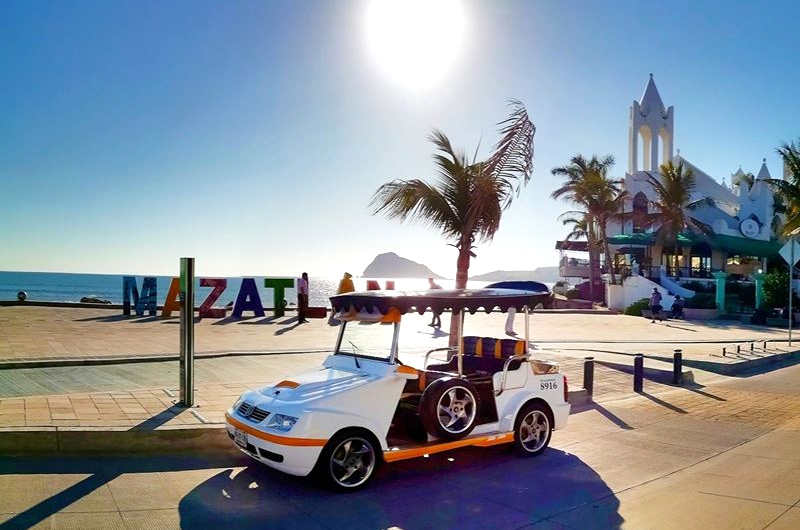
The Unwritten Rule
Despite debates about modernization, the Pulmonía remains. It is not nostalgia—it is living culture. There is an unwritten rule: If you visit Mazatlán, you must ride a Pulmonía. Because here, the Pulmonía is the present. It is movement. It is pride on wheels.
