
El Corrido: México’s Windows to its Past, Present and Future.
By Lorenzo Covarrubias,
PhD in Cultural Anthropology
El Corrido is a musical art form unique to México. Born among the rural populations of the country, it is over 200 years old. Think of corridos as heroic ballads, exaggerated truths, social commentaries, oral literature, oral stories, and even oral news. Corridos document and reflect what is current, what was, and what might be. And, as such, the one element connected to them throughout its existence…is that if they are anything, they’re controversial.
Currently, a most pressing controversy is the prevalence of this type of song highlighting the exploits of key figures in the drug trade.
El Corrido as México’s window to its past
The Corridos are the country’s windows to its past, present…and will be for the future. The first corrido is believed to be one regarding Fr. Miguel Hidalgo (México’s George Washington) in the 1810s, as he led México’s insurrection and Independence movement against Spain. For the next 100 years, corridos focused on the daring bandidos (outlaws) that mostly robbed from the rich and supposedly gave to the poor. They include Chucho el Roto (which was a hit radio series in the 1960s and 1970s) and Heraclio Bernal (Sinaloa’s version of Robin Hood).
Major events like the US-Mexican War (1846-1848) and the French Intervention (1862-1867) also provided ample sources for corridos. “Doña Elena y el Francés” is a famous corrido in which fateful love and war intermingle, for example.
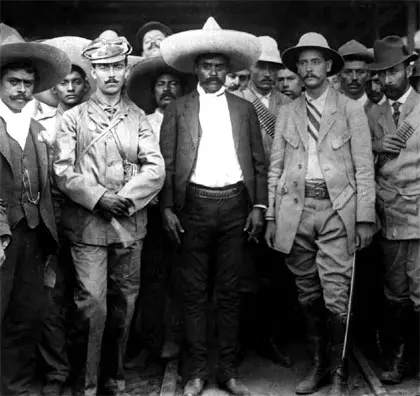
However, it was until the Mexican Revolution of the 1910s that the corridos became central for its understanding. Key figures as Pancho Villa and Emiliano Zapata, and their followers or soldiers became part of the corrido experience. “El Mayor de los Dorados” is a haunting rendition of the life of an officer—a Major—during and after his time in Villa’s army. The backdrop of the Mexican Revolution is also a key theme in many famous corridos.
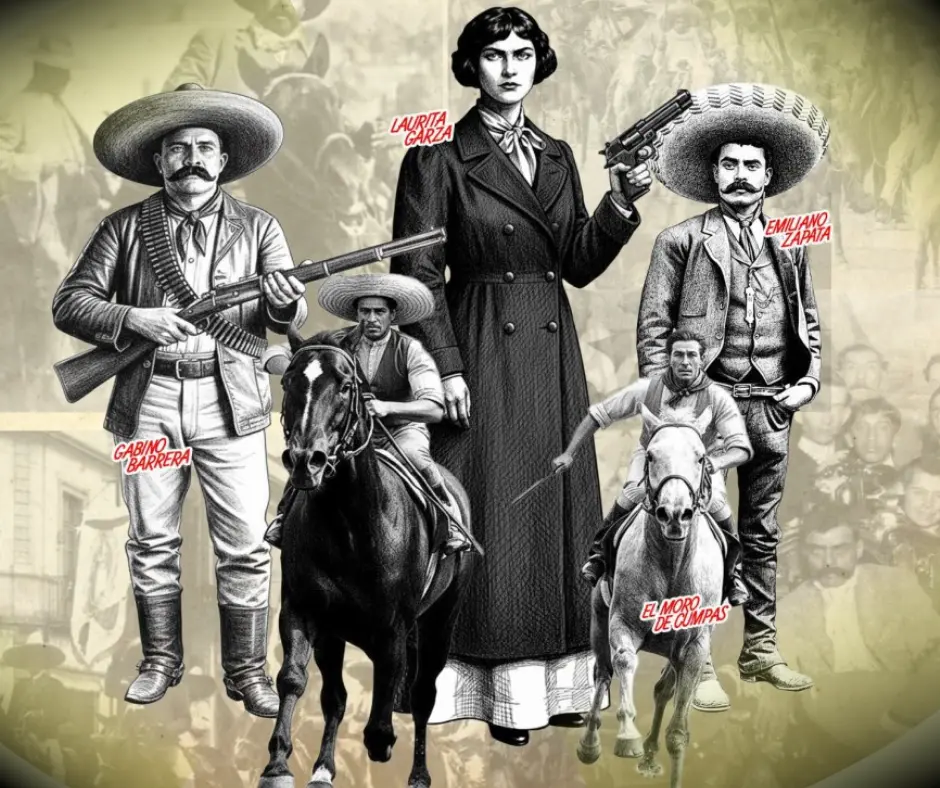
“Gabino Barrera” for example, is the tragic ending of a tough rural man who professes his support for Zapata, and ultimately is killed by offended family members seeking retribution for his love affairs. Though the government tepidly had tried to prohibit corridos before, it was during the Mexican Revolution period that the government actively sought to ban them, as corridos more often than not highlighted the exploits of revolutionaries and the excesses of the federal government.
Songs of places, animals, and revenge
Corridos seemingly cover the whole gamut of the Mexican human experience. Think of a topic, and it will have been covered…and if not, it will be. Both innate and inanimate objects are game. Cities, regions, and states are commonly addressed. “El Corrido a Mazatlán” is a perfect example. It speaks to the beauty of the city, its architecture, and people. You probably have heard it plenty of times if you like to hang out by the sea, as pulmonias and aurigas/arañas commonly blare it out up and down the malecón.
This “ode” to the port city is replicated throughout México, as its states and many of its cities have their own corridos. Towns have them too: in El Quelite, locals still talk about the corrido “Qué Bonito es El Quelite.”
Animals are also a constant source of inspiration, particularly in its post-revolutionary golden age, with horses and dogs taking preeminence. “El Moro de Cumpas” is probably the most famous corrido highlighting horses and horse racing. And, as many corridos have, it became a well-known movie with Antonio Aguilar (a famous corrido and ranchera singer) as its lead. Though the horse profiled ultimately lost the race, it speaks to its beauty and resilience.
“El Perro Negro” is a famous song written by Jose Alfredo Jiménez (who also wrote “El Corrido a Mazatlán”) and it is the story of a vengeful huge black dog who killed the powerful man who had in turn killed his master. The story ends with the dog dying in the tomb of its former owner, unwilling to eat or sleep.
Speaking of vengeance, a famous corrido is that of “La Venganza de María”. In it, María, the beautiful daughter of a respected man, plots and kills her father’s killer… who had killed him to leave her unprotected…. which, in turn, backfired as ultimately SHE killed him during a dance. Though corridos are a male-dominated world, the male gaze enough looks to the other side to include a gendered version of it. Corridos also make stars. “Laurita Garza” became a huge hit for a group known as Los Invasores de Nuevo León.
It is the tragic story of torn lovers, deceit, and ultimately a murder-suicide…by Ms. Garza herself, the school teacher!

México Canta and the corrido debate today
Recently, a national song contest known as México Canta (México Sings) just wrapped its first edition. It’s actually a creative response by México’s government and its Presidenta Claudia Sheinbaum Pardo to diminish the taste for corridos highlighting the exploits of the drug trafficking world. Though it is now rare to hear these type of corridos in the radio or television, social media still provides plenty of opportunities to hear them. To offset the seemingly endless appetite for such corridos, alternatives are being created. Censorship has not worked in the past, is not working in the present, and will not for in the future.
Press Club · Reader support
Support Pacific Pearl
Independent English news from Mazatlán since 1992. A monthly membership helps keep the paper in print and online.
Cancel anytime. You won’t be charged again after you cancel.
Secure payment with Stripe · One-time support from $10 · Learn about the Press Club
Thus, other venues are being explored to limit the pull such corridos have in Mexican society. The contest is an official initiative of the federal government, through the Secretaría de Cultura, and is presented on the government’s México Canta website.
Corridos, then, are not merely songs or stories told through music. Though initial songs that eventually would turn into corridos were present in Europe and brought to the Americas during the Spanish conquest and colonization (which lasted 300 years), stories or news told in song became something much more in the fertile minds of Independent, Revolutionary and modern México. These windows to the Mexican soul at once entertain, challenge, bother, exploit all it touches. As well as it should be…otherwise, they wouldn’t be corridos.
Related reading from Pacific Pearl: Merengue: Music, Dance and Identity.
This page keeps the original reporting on el corrido together for readers who want the facts as first published.
The details given here about el corrido are those of the original article; this closing only adds structure and practical context.
Official links included with this note are meant to help a reader go beyond the article on el corrido without changing its reporting.
Pacific Pearl’s edit on el corrido does not alter the published title, date, or URL.
If you are new to the subject, start at the opening section on el corrido and use the questions below as a recap.
That is the most careful way to read this account of el corrido.
Share this piece on el corrido with anyone who missed it when it first appeared.
Frequently asked questions about el corrido
What is el corrido, in this essay?
Lorenzo Covarrubias, PhD in cultural anthropology, presents el corrido as a Mexican musical form that opens windows onto the country’s past, present, and future.
Is this a concert listing?
No. It is a cultural essay. The historical and musical argument is in the original text.
Does this edit change the author’s claims?
No. It adds structure and a short recap only.
Press Club · Reader support
Support Pacific Pearl
Independent English news from Mazatlán since 1992. A monthly membership helps keep the paper in print and online; stories stay free for everyone.
Cancel anytime. You won’t be charged again after you cancel.
Secure payment with Stripe · One-time support from $10 · Learn about the Press Club



Comments (0)